The short version: repair single failures on sound doors; replace doors whose structure, surface and systems are failing together. The long version — with numbers — follows.
In This Guide
- The One-Third Rule (and Its Exceptions)
- The Structural Checklist That Decides It
- The Case for Repairing (More Often Than You'd Think)
- The Case for Replacing (When It's Genuinely Time)
- Getting Both Quotes the Right Way
- Three Doors, Three Verdicts
- What 'Structurally Sound' Really Means
- Timing a Replacement: Seasons and Strategy
Key Takeaways
- If the repair costs less than about a third of a comparable new installed door, and the rest of the door is sound, repair.
- Walk the door: are sections rusted through anywhere, especially the bottom section's lower edge? Are there cracks running across a section, or sections bowing between the tracks? Do the sections still meet evenly, or have the joints opened into daylight gaps? Is the door's finish failing across most of its face, not just one panel? Two or more 'yes' answers put you in replacement territory regardless of the current repair's price.
- Most doors that 'feel old' are one wear part away from feeling new again.
- Replacement wins when the door is costing you beyond repairs: an uninsulated thin-steel door baking a Texas garage or bleeding heat from a New England house is a daily expense, not an asset.
- Ask for the repair quote and the replacement quote in writing, from the same visit, with the replacement scoped completely (tracks, springs, seals, haul-away included) so the comparison is apples to apples.
- Case one: a 14-year-old steel door, one spring snapped, sections clean, finish sound.
- Run your hand along the bottom section's lower rail: flaking rust or soft spots mean the section's strength is leaving.
- If your verdict is 'replace, but not urgently,' timing is money.
How to use this guide: find your situation in the tables, note the fair range, then compare it line by line with any quote you receive — including ours. If a number falls outside the ranges here, the right response isn't panic; it's one question: 'what's different about my door?' A good company answers it in specifics — door weight, part specification, timing — and a vague answer is itself the answer. When you're ready for an exact figure, call (210) 964-8892: our quotes are flat, written from the same data as this guide, and confirmed before any work begins.
The One-Third Rule (and Its Exceptions)
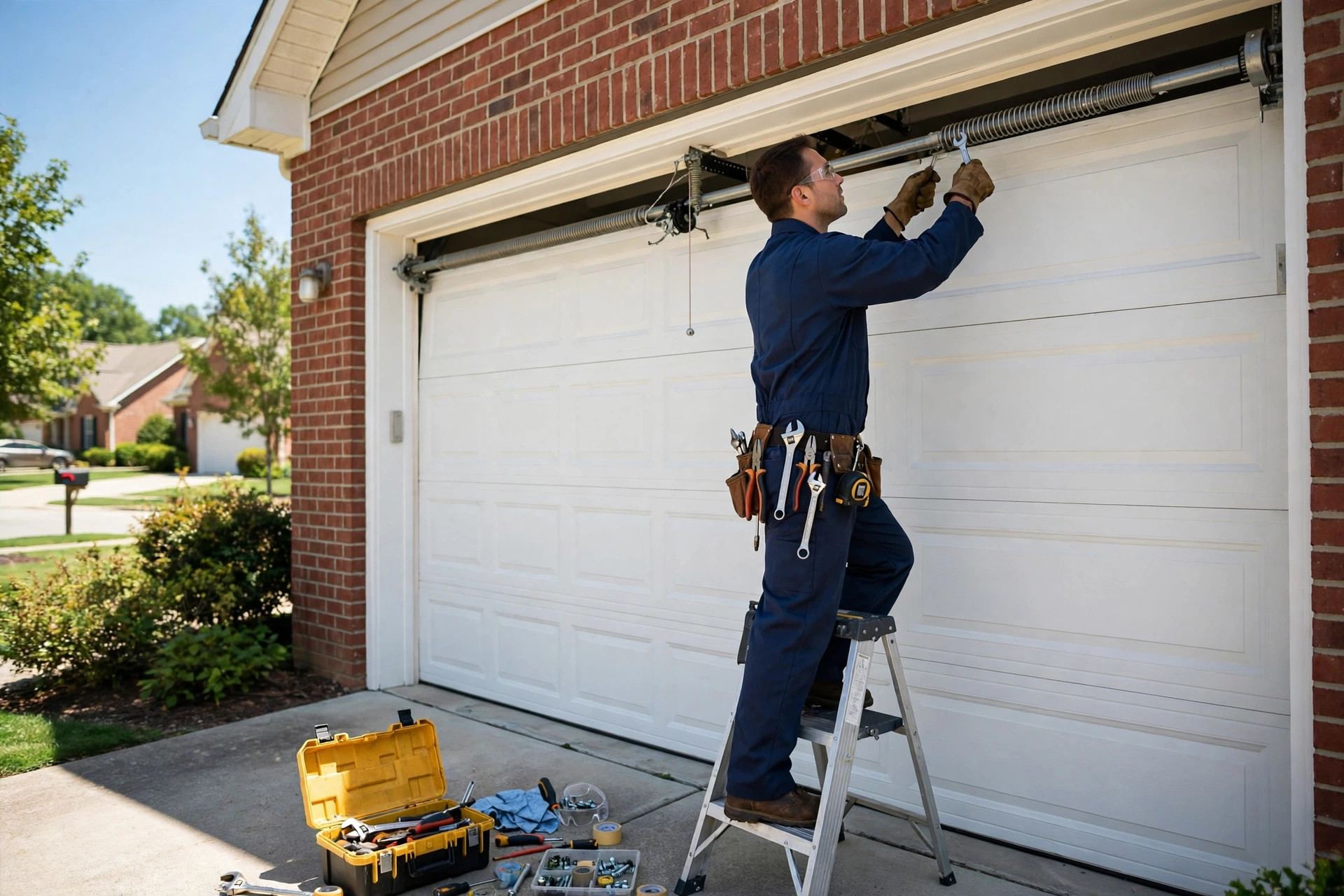
If the repair costs less than about a third of a comparable new installed door, and the rest of the door is sound, repair. A $250 spring job on a healthy door versus $900 for replacement is not a close call — the repair buys years at a fraction of the price. The rule exists because garage doors are systems of wear parts (springs, cables, rollers) around a durable structure (sections, tracks); replacing wear parts is the design working as intended.
The exceptions: when two or more major systems need work simultaneously (springs plus panels plus opener), the stack can breach the one-third line in a single season even if each quote individually doesn't. And when the door's structure itself is the problem — rust-through, cracked sections, sagging — no wear-part repair restores it. Structure beats arithmetic.
The Structural Checklist That Decides It
Walk the door: are sections rusted through anywhere, especially the bottom section's lower edge? Are there cracks running across a section, or sections bowing between the tracks? Do the sections still meet evenly, or have the joints opened into daylight gaps? Is the door's finish failing across most of its face, not just one panel? Two or more 'yes' answers put you in replacement territory regardless of the current repair's price.
Then the parts-availability test: doors past 20-25 years increasingly meet discontinued panels and hardware. A single damaged section on a discontinued door isn't a panel job — it's a replacement conversation. Your technician can identify the door's make and model year from its labels and tell you plainly where availability stands.
The Case for Repairing (More Often Than You'd Think)
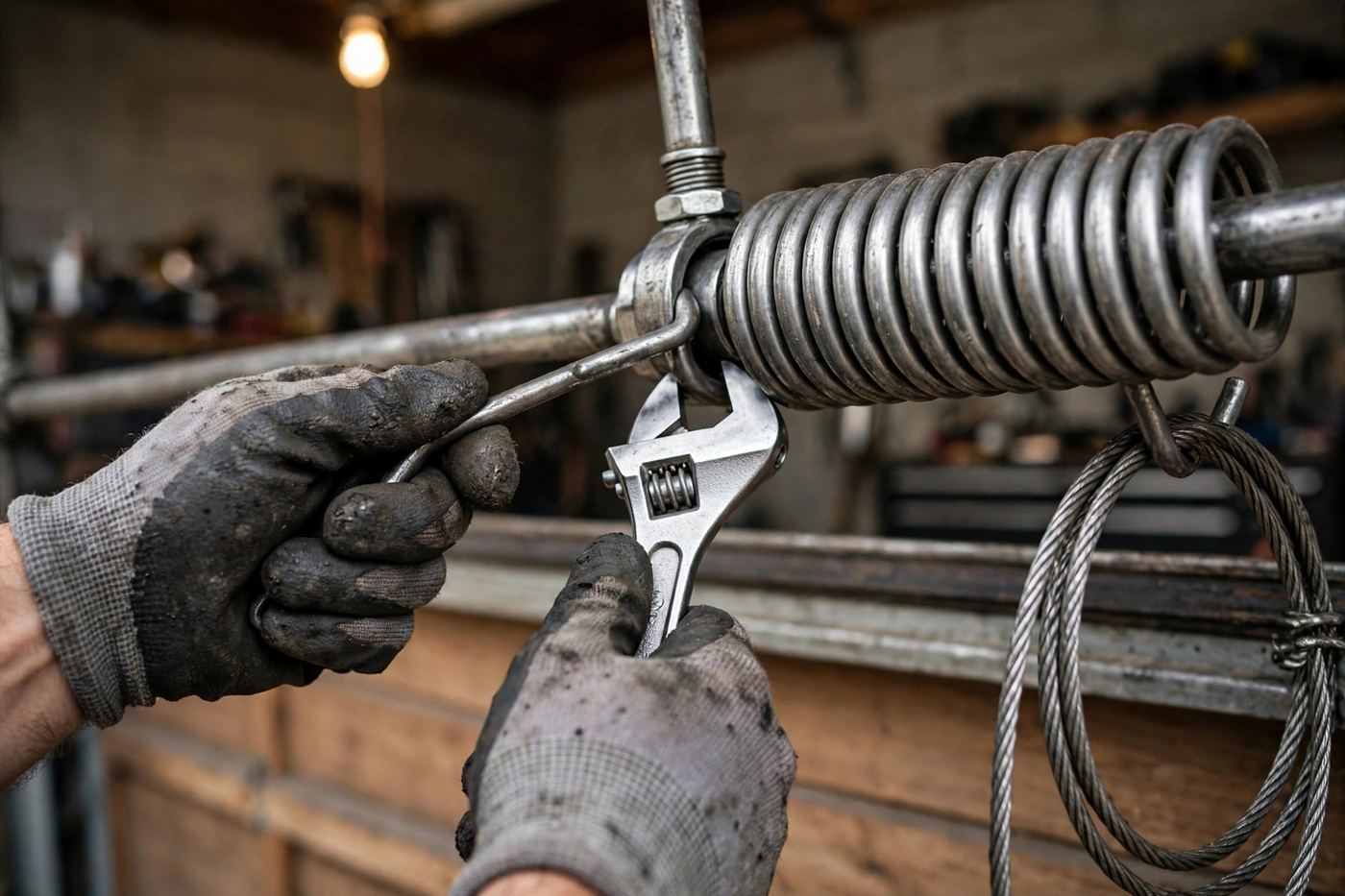
Most doors that 'feel old' are one wear part away from feeling new again. Springs restore the lift; rollers restore the glide; cables and bearings restore the level travel; seals restore the weather-tightness. A door that receives its wear parts on schedule can serve 25-30 years, and the cumulative cost of those parts over that life is still well under repeated door replacements. Sentiment aside, the garage door industry builds doors to be maintained, not landfilled.
Repair also preserves options: a $300 repair today keeps the door excellent while you plan a considered replacement — right style, right insulation, off-season scheduling — instead of a rushed purchase with a dead door hanging over the decision.
The Case for Replacing (When It's Genuinely Time)
Replacement wins when the door is costing you beyond repairs: an uninsulated thin-steel door baking a Texas garage or bleeding heat from a New England house is a daily expense, not an asset. Security argues too — pre-1993 doors may lack modern safety systems entirely, and old doors with failing sections are the softest entry point on the house. Curb appeal is real money: the garage door dominates most street views, and replacement is a proven top-tier resale project.
And sometimes the household simply changes: a workshop conversion, an EV's climate needs, a home office over the garage that hears every cycle. A quiet insulated door with a belt-drive opener solves all of those at once — value that no repair can deliver, at $550-$1,800 installed.
Getting Both Quotes the Right Way
Ask for the repair quote and the replacement quote in writing, from the same visit, with the replacement scoped completely (tracks, springs, seals, haul-away included) so the comparison is apples to apples. A company that only wants to sell doors will shade the repair quote; one that only does repairs will shade the replacement case. The numbers should both survive scrutiny against published ranges — repairs $125-$350 typical, doors $550-$1,800 installed.
Then decide on your timeline, not the door's emergency. If the door can be repaired safely now, you've bought yourself the luxury of choosing a door you love later. If it can't, at least the framework in this guide got a fair hearing before the money moved.
Three Doors, Three Verdicts
Case one: a 14-year-old steel door, one spring snapped, sections clean, finish sound. Verdict: repair, and it isn't close — $200-$350 restores a door with a decade of structure left. Case two: a 19-year-old door with a rusted-through bottom section, a second section cracking, and a discontinued model. Every dollar of repair buys time on a door whose parts supply has ended. Verdict: replace, and spend the repair money on the insulation upgrade instead.
Case three is the interesting one: a 12-year-old door needing springs ($300), a roller set ($180) and living over a bedroom it keeps waking. Repair math says fix it; quality-of-life math says the quiet, insulated replacement solves a daily problem the repairs never will. Both answers are defensible — which is why the framework ends with your priorities, not a formula. The technician's job is honest numbers for both doors: the one you have and the one you'd get.
What 'Structurally Sound' Really Means
Run your hand along the bottom section's lower rail: flaking rust or soft spots mean the section's strength is leaving. Look across each section in raking light: waves and bows between the tracks mean the panel has been stressed past its shape. Check the stiles — the vertical edges where hinges mount — for cracks radiating from screw holes, the classic fatigue signature of a section near the end.
Then the track test: a structurally sound door travels without the sections visibly flexing or the rollers climbing. Flex means the sections are doing work the hardware should do. Two or more of these findings, and 'sound' no longer describes the door — you're maintaining a memory. One finding is a repair conversation. Zero findings is why repair usually wins.
Timing a Replacement: Seasons and Strategy
If your verdict is 'replace, but not urgently,' timing is money. Manufacturers' lead times run shortest in the shoulder seasons, installers' schedules are friendliest outside the January emergency peak and the summer renovation rush, and a door ordered calmly is a door chosen well — style, insulation and windows decided at the kitchen table instead of under the pressure of a door hanging open.
The bridge strategy matters too: a safe, honest repair that buys a season — a spring, a cable set, a panel brace — is often the smartest $200 in the whole project, converting an emergency purchase into a planned one. Ask your technician directly which repairs are safe bridges and which are good money after bad on your specific door.
One more timing note: if you're planning to sell within two years, a replacement's resale math strengthens (it's a top-tier curb-appeal project), while deep repairs' math weakens — nobody pays a premium for a well-repaired old door, but they do for a new one. Match the decision to your horizon, not just the door's condition.
Repair vs. Replace: Quick Reference
| Item | Cost / Rating | Notes |
|---|---|---|
| Broken spring, sound door | Repair | $120-$350 vs $550+ door |
| One damaged section, current model | Repair (panel) | $250-$800 vs full replacement |
| Discontinued model + damage | Replace | Panels unavailable; money pit risk |
| Rust-through on 2+ sections | Replace | Structure is the problem |
| Multiple systems failing yearly | Replace | The stack exceeds the one-third rule |
| Uninsulated door, rooms above garage | Replace (quality of life) | Comfort + quiet + energy |
Frequently Asked Questions
At what age should a garage door be replaced?
There's no fixed age — condition decides. Well-maintained doors serve 25-30 years; neglected ones can be structurally done at 15. Use the structural checklist: rust-through, cracked or bowing sections, and discontinued parts are the real retirement signals.
My door needs springs and a panel. Repair or replace?
Price the stack: springs ($120-$350) plus a section ($250-$800) can total $400-$1,100 against $800-$1,800 for a new double door with everything fresh and warranted. If the door is older or other sections are tired, replacement usually wins this one.
Does a new door include new springs and tracks?
In a proper installation, yes — door, tracks, springs, cables, rollers and seals are all new and matched. If a replacement quote reuses old springs or tracks, ask why; it's a corner that shouldn't be cut.
Can a repair buy me time to plan a replacement?
Absolutely — and it's often the smartest sequence. A safe, sound repair now lets you choose style, insulation and timing deliberately instead of under emergency pressure.
What if the opener is dying too?
Treat door and opener as separate decisions with separate math, but consider bundling labor if both genuinely need replacement — one visit, one setup, matched components.
Does replacing the door mean replacing the opener too?
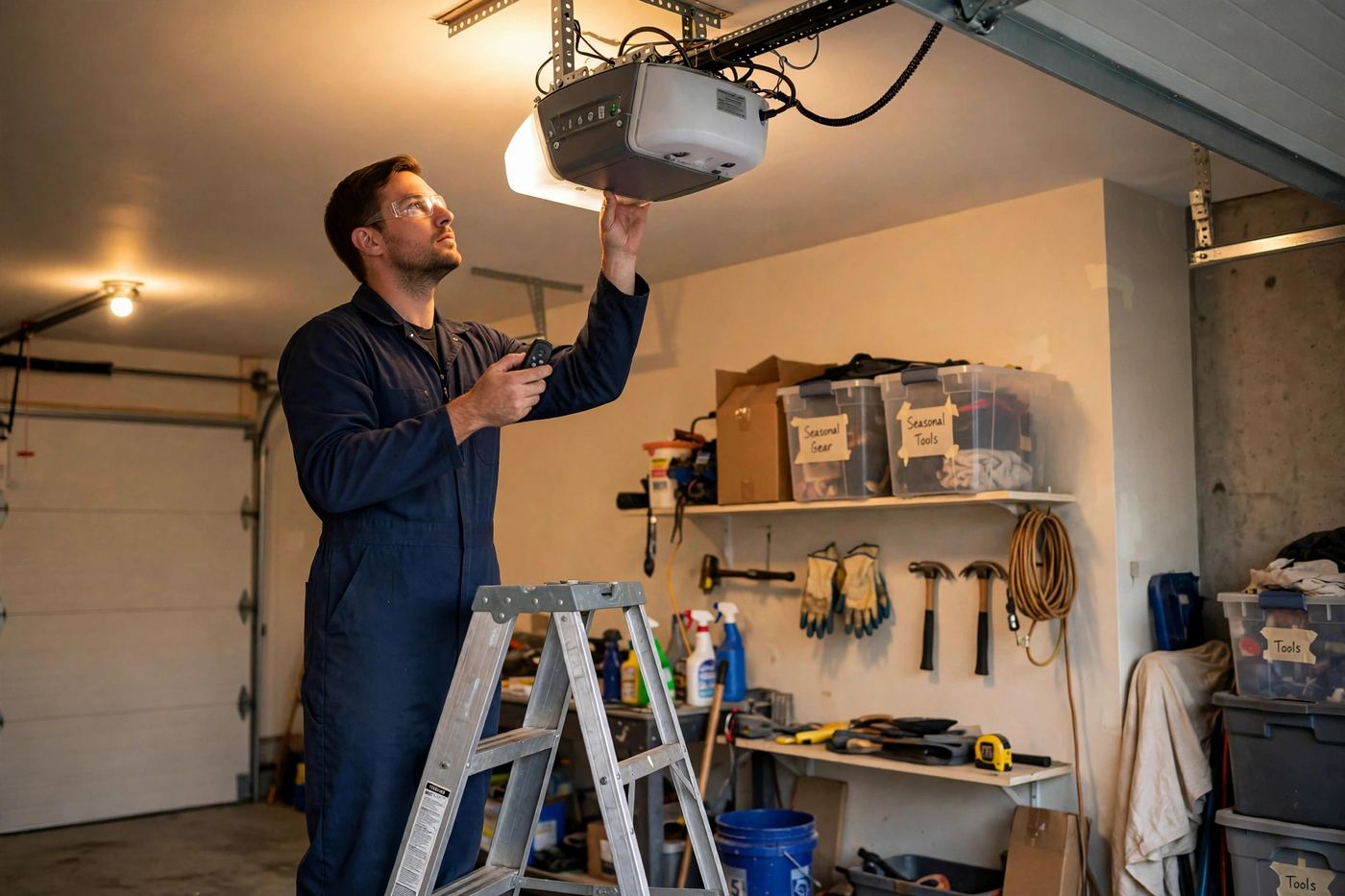
Not automatically. A healthy opener sized for the new door's weight recalibrates and carries on. The opener gets its own repair-or-replace test (age, safety features, repair cost vs. half of new). Bundling both replacements is only smart when both independently fail their tests.
Related Services
Garage Door Repair
Complete diagnosis and repair for doors that won't open, close, balance or seal — most repairs finished in a single visit.
Learn more about garage door repair →New Garage Door Installation
Full door replacement and new installs — steel, insulated, carriage-style and modern doors, measured, fitted and balanced.
Learn more about new garage door installation →Garage Door Panel Replacement
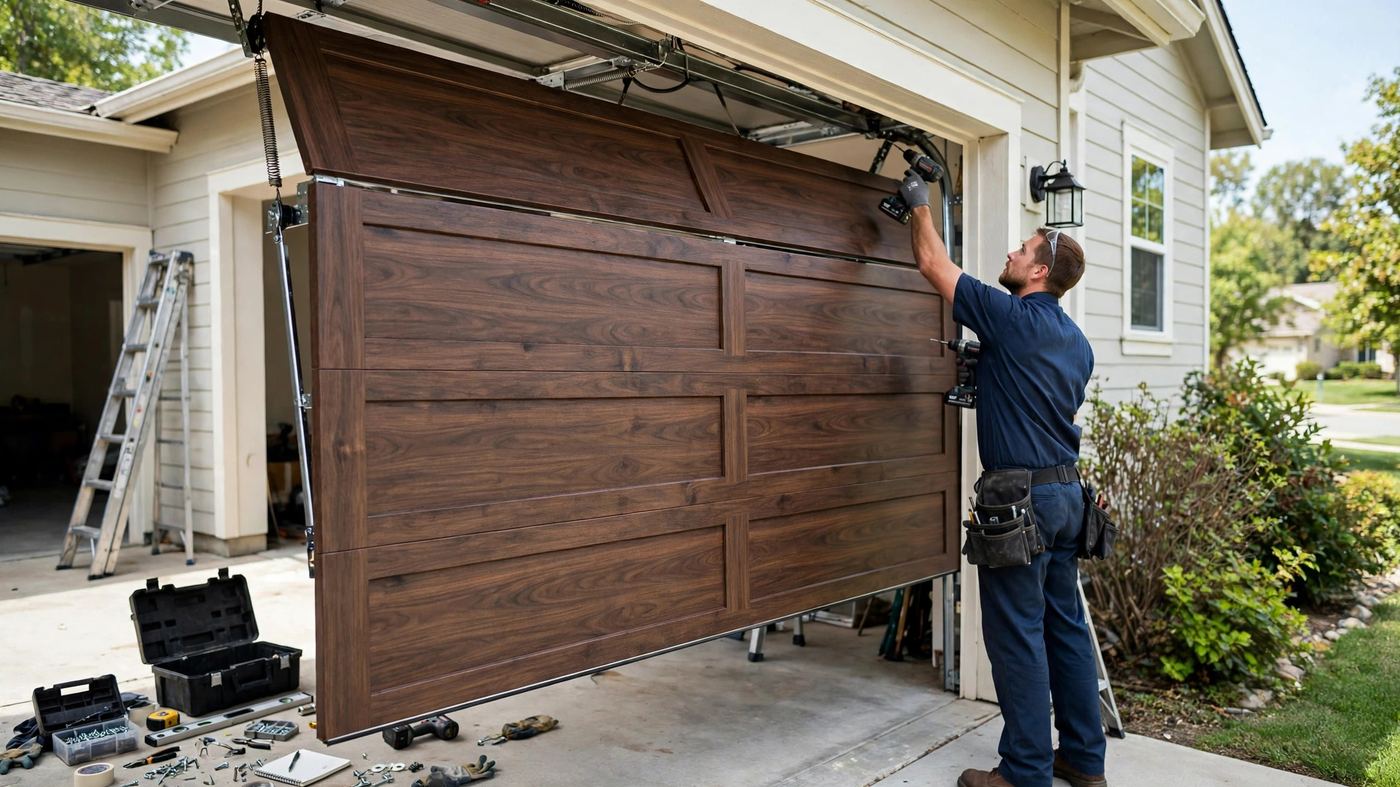
Cracked, dented or rusted panel? We match and replace individual sections when the model allows — or give honest replacement math.
Learn more about garage door panel replacement →← All garage door guides · Costs & pricing hub
Garage Door Stuck? We Can Fix It Today.
Same-day appointments and 24/7 emergency service across all 50 of our service cities. Upfront price before work starts — no surprises on the invoice.
(210) 964-8892 ☎ Call Now — Open 24/7