It also covers the number nobody puts in the headline: garage doors consistently rank among the highest resale-return projects in remodeling surveys, often recouping the majority of their cost at sale — before counting a decade of daily use.
In This Guide
- What the Installed Price Includes
- Material Pricing Tiers
- Insulation: The Upgrade That Changes Daily Life
- Style, Windows and Hardware: Where Budgets Bend
- Comparing Quotes and Avoiding Traps
- Hidden Costs Quotes Sometimes Miss
- How Long Doors Take: Stock vs. Special Order
- Rebates, Insurance and Other Money Angles
Key Takeaways
- An honest installed quote covers the door sections, new tracks, new springs sized to the door, cables, rollers, hinges, weather seals, reconnection and calibration of your opener, and removal of the old door.
- Steel is the market's center of gravity: durable, low maintenance, and available from basic single-layer doors at the budget end to triple-layer insulated models at the top.
- Insulation is priced in R-value.
- Carriage-style embossing, decorative windows and hardware packages typically add $150-$600 over a plain raised-panel door.
- Get the model number in writing.
- Three line items separate honest quotes from teasers.
- Stock doors — standard sizes, white or almond, common panel styles — often install within a week of the quote.
- Three money angles occasionally attach to a new door.
How to use this guide: find your situation in the tables, note the fair range, then compare it line by line with any quote you receive — including ours. If a number falls outside the ranges here, the right response isn't panic; it's one question: 'what's different about my door?' A good company answers it in specifics — door weight, part specification, timing — and a vague answer is itself the answer. When you're ready for an exact figure, call (210) 964-8892: our quotes are flat, written from the same data as this guide, and confirmed before any work begins.
What the Installed Price Includes
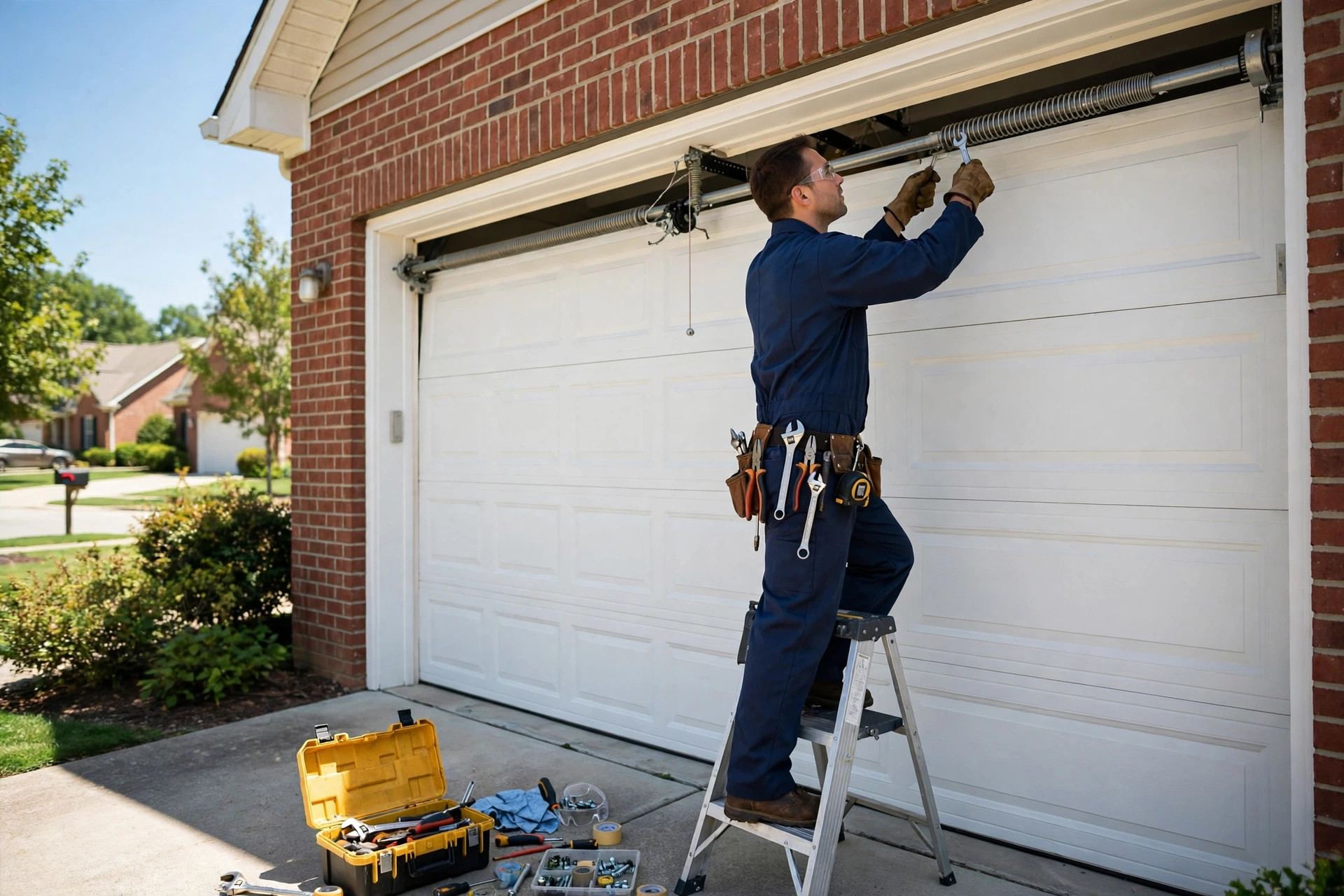
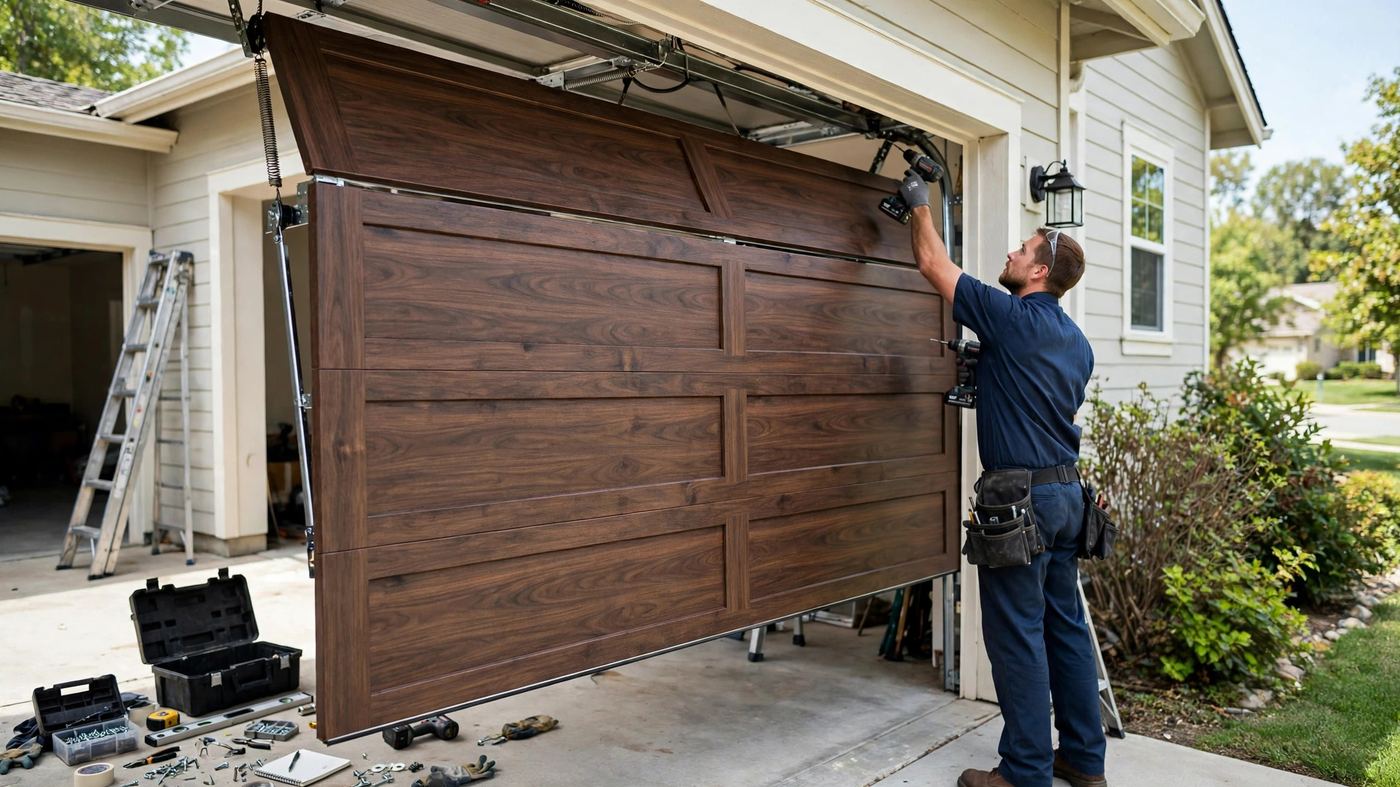
An honest installed quote covers the door sections, new tracks, new springs sized to the door, cables, rollers, hinges, weather seals, reconnection and calibration of your opener, and removal of the old door. When a quote looks suspiciously low, it's usually because something on that list is 'extra' — most often haul-away, seals, or the springs (reusing old springs under a new door is false economy that voids the point of the job).
Labor is a substantial share of the total, and it's where quality lives: a door hung plumb and square with properly tensioned springs runs quietly for decades; a rushed install binds, leaks air, and wears its hardware in years. Compare quotes on scope, not just totals.
Material Pricing Tiers
Steel is the market's center of gravity: durable, low maintenance, and available from basic single-layer doors at the budget end to triple-layer insulated models at the top. Expect steel singles from about $550 installed and doubles from $800. Aluminum-and-glass modern doors start higher and suit contemporary homes. Fiberglass and vinyl sit in the middle tiers with specific climate strengths (vinyl shrugs off coastal salt; fiberglass resists dents).
Real wood is the premium tier — often $1,500-$4,000+ installed — and buys unmatched character at the cost of real maintenance. Wood-composite and steel carriage-style doors deliver most of the look for a mid-tier price, which is why they've become the default upgrade recommendation.
Insulation: The Upgrade That Changes Daily Life
Insulation is priced in R-value. A basic polystyrene-insulated door (around R-6) typically adds $100-$250 over the non-insulated equivalent; polyurethane premium doors (R-12 to R-18) add more. Whether it's worth it depends on the garage's relationship to the house: attached garage with a bedroom above or living wall shared — absolutely; detached storage-only garage — optional.
The benefits aren't only thermal. Insulated doors are quieter (the foam kills the oil-can drumming of thin steel), stiffer and more dent-resistant, and they moderate the garage temperature swings that age stored paint, tools and car batteries. In hot climates — Texas, inland California, Georgia summers — an insulated west-facing door can cut garage temperatures dramatically.
Style, Windows and Hardware: Where Budgets Bend
Carriage-style embossing, decorative windows and hardware packages typically add $150-$600 over a plain raised-panel door. Windows deserve care in the quote: insulated and tempered glass options cost more but answer the security and efficiency objections; window placement in the top section preserves privacy while adding light.
Wind-load reinforcement is a non-negotiable line in storm and tornado regions rather than an upgrade — reinforced doors carry ratings for the gusts that fold standard doors, and insurance or code may require them. Your installer should raise it if your area calls for it, with the rating stated in the quote.
Comparing Quotes and Avoiding Traps
Get the model number in writing. Door pricing is model-driven, and '16x7 insulated door' can describe products $600 apart in quality. Confirm: spring cycle rating (ask for high-cycle if you use the door heavily), seal package included, haul-away included, warranty terms for door, finish and labor, and whether opener reconnection and recalibration are in the price.
The too-cheap quote usually reappears as change orders; the too-dear quote usually hides in vague language. A mid-market quote with everything itemized is the one to beat — and on a product you'll operate 1,000+ times a year, installation quality is worth more than the last $75 of discount.
Hidden Costs Quotes Sometimes Miss
Three line items separate honest quotes from teasers. First, disposal: removing a 16-foot door is real work, and 'haul-away extra' can add $75-$150 after the fact. Second, the opener question — a heavier new door may need a stronger opener, and discovering that on install day is a $400 ambush; it should be assessed at measurement. Third, trim and finish: exterior trim (the brickmould and weather seal frame) is sometimes excluded and sometimes genuinely needs replacing on older openings.
Ask one question of every quote: 'What, in total, will I have paid when the truck leaves?' — then get the answer in writing. Our quotes are built to answer it with the number on the page.
How Long Doors Take: Stock vs. Special Order
Stock doors — standard sizes, white or almond, common panel styles — often install within a week of the quote. Choose a specific color, carriage style with windows, an oversized opening, or real wood, and lead times stretch to 2-6 weeks depending on the manufacturer. That timeline matters most when the old door is damaged: ask how the opening will be secured in the interim (we secure or board as needed, and it's part of the job, not a favor).
Ordering in the shoulder seasons (early spring, early fall) typically shortens manufacturer lead times versus the January repair peak and the summer renovation rush — a scheduling edge worth real money if your replacement isn't urgent.
Rebates, Insurance and Other Money Angles
Three money angles occasionally attach to a new door. Energy incentives: insulated doors sometimes qualify under local utility or state efficiency programs — the amounts are modest and change yearly, so ask your installer what's current rather than trusting any website's figure, including ours. Insurance: when a door is replaced after a covered event (vehicle impact, storm), the replacement may be claimable — document damage before removal and keep the itemized invoice.
Financing is the third angle, and it deserves a cold eye: a door is a $550-$1,800 purchase, small enough that financing fees and interest can quietly outrun the insulation upgrade you were stretching for. If a payment plan makes the right door possible, compare its total cost against the cash price of the door one tier down; the honest comparison sometimes flips the choice.
Finally, the neighbor effect is real economics: the garage door is the largest single element of most homes' street view, and appraisers and buyers both price what they see. Of all the places to find $200 in a door budget, the visible face of the house is the last one where it pays to be cheap.
New Door Price Reference (2026, Installed)
| Item | Cost / Rating | Notes |
|---|---|---|
| Single door, steel, non-insulated | $550-$900 | Budget tier; detached garages |
| Single door, insulated | $750-$1,300 | The attached-garage sweet spot |
| Double door, steel, non-insulated | $800-$1,300 | Standard 16x7 |
| Double door, insulated / carriage style | $1,100-$1,800+ | Style + R-value upgrades |
| Real wood door | $1,500-$4,000+ | Premium tier; maintenance required |
Frequently Asked Questions
How long does a new garage door last?
A quality steel door lasts 20-30 years with basic care; springs are wear items replaced every 7-12 years depending on cycle rating and use. Insulated doors often age better because the sections are stiffer.
Should I replace the springs and tracks with a new door?
Yes — a professional installation includes new tracks and new springs sized to the door as standard. Reusing old wear parts under a new door undermines the investment.
Can I install a garage door myself to save money?
Door installation involves the same spring tension that makes spring repair dangerous, plus precise track alignment that determines how the door runs for decades. It's a false economy for most homeowners; professional installation is bundled into the prices in this guide.
Does a new door really add resale value?
Garage door replacement has ranked at or near the top of Cost vs. Value remodeling surveys for years, often recouping most of its cost at resale — because it's the largest single visual element on most home fronts.
How long from quote to installed door?
Stock doors are often installed within a week. Specialty styles, colors and sizes run 2-6 weeks depending on the manufacturer. Your quote should state the lead time.
Can I buy the door myself and pay for installation only?
You can, but it usually saves little and risks much: sizing errors become your problem, manufacturer warranties may require professional installation, and the spring/track hardware still needs professional supply and fitting. The installed quotes in this guide bundle door, hardware, springs, tracks, seals and labor — compare any DIY total against that full scope, not just the door's shelf price.
Related Services
New Garage Door Installation
Full door replacement and new installs — steel, insulated, carriage-style and modern doors, measured, fitted and balanced.
Learn more →Garage Door Panel Replacement
Cracked, dented or rusted panel? We match and replace individual sections when the model allows — or give honest replacement math.
Learn more →Garage Door Repair
Complete diagnosis and repair for doors that won't open, close, balance or seal — most repairs finished in a single visit.
Learn more →← All garage door guides · Costs & pricing hub
Garage Door Stuck? We Can Fix It Today.
Same-day appointments and 24/7 emergency service across all 50 of our service cities. Upfront price before work starts — no surprises on the invoice.
(210) 964-8892 ☎ Call Now — Open 24/7