It also explains the label you'll hear from technicians — cycle rating — and why it's the single most important spec on any spring quote.
In This Guide
Key Takeaways
- Springs fatigue with every wind and unwind, the same way a paperclip fatigues when bent back and forth.
- Torsion springs (above the door, on a shaft) generally outlast extension springs (along the side tracks) because they distribute stress more evenly and operate in a controlled wind.
- Age in cycles is invisible, but dying springs announce themselves: the door grows gradually heavier when lifted manually; the opener sounds more strained than it used to; the door may stop a few inches short of fully opening or drift down from a held position.
- Three proven levers: lubrication, balance checks, and buying cycle rating.
- Cold contracts steel and stiffens old lubricant, so the first lift on a freezing morning is the highest-stress cycle of a spring's life — which is why spring calls spike in the first cold snap and again in January, the year's peak garage-repair month nationally.
- Track one ordinary week honestly: every departure and arrival, the school run, the dog's yard trips through the garage, the weekend errands, the kids' bikes.
- Mostly no — cycle fatigue dominates — but time isn't free either.
- Households that treat the garage door like the machine it is have fewer spring surprises.
How to use this guide: work the checks in the order given — they're sequenced from the most common and cheapest causes to the rarest and most involved, which is exactly how a technician's diagnosis proceeds. Stop at the step that solves it, and stop entirely at anything involving springs, cables or a door that's crooked or off its tracks: those are professional jobs, and this guide will tell you plainly when you've reached one. If you reach the end without a fix, call (210) 964-8892 and tell the dispatcher which steps you completed — you'll skip half the diagnosis and get the right parts on the first truck.
Cycles: The Only Honest Measure of Spring Life
Springs fatigue with every wind and unwind, the same way a paperclip fatigues when bent back and forth. Manufacturers rate springs by cycles: 10,000 is the standard builder grade, 15,000-20,000 is mid-tier, and high-cycle springs reach 25,000-50,000+ using larger-diameter wire that flexes less per cycle. The wire size difference is invisible to the eye but decisive in lifespan.
Do your household math: count daily door cycles honestly (every open and close, including the kids, the cars, and the mid-day errands) and divide the rating. Four cycles a day consumes a 10,000-cycle spring in about 6.8 years. Six cycles a day — common when the garage is the main entrance — burns it in 4.5. This is why 'my springs only lasted five years' usually means 'my springs lived exactly as long as they were rated to.'
Torsion vs. Extension Spring Lifespans
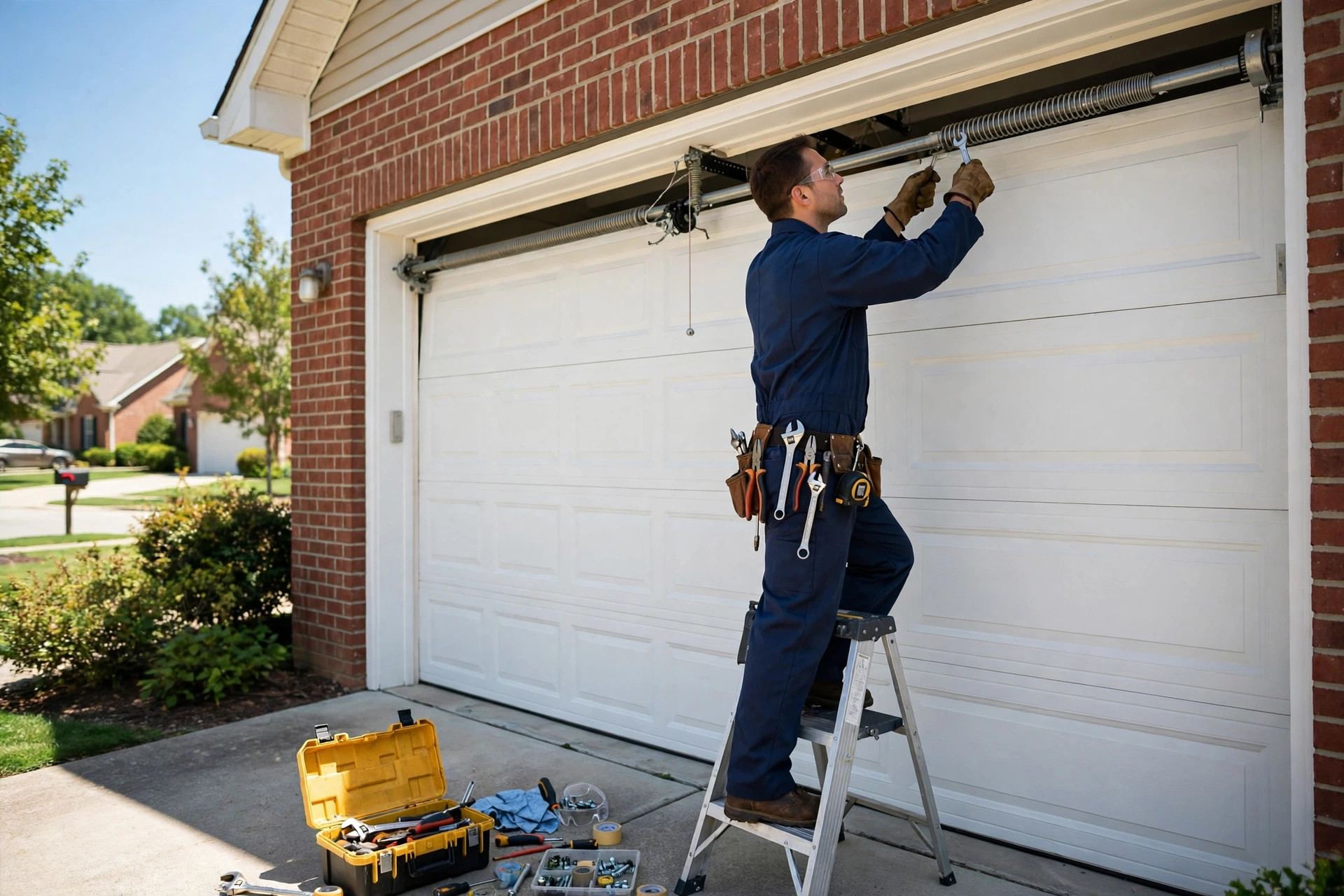
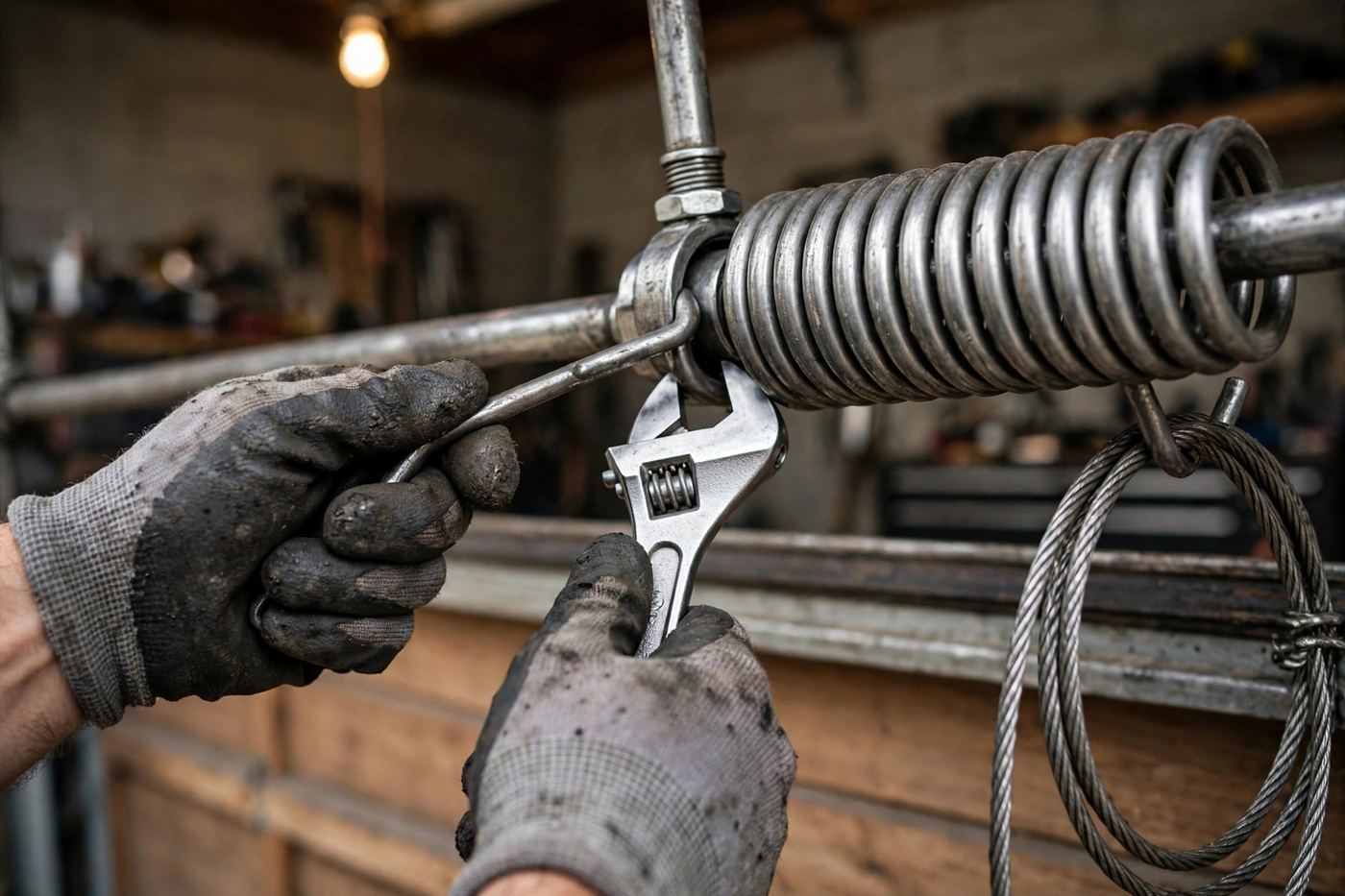
Torsion springs (above the door, on a shaft) generally outlast extension springs (along the side tracks) because they distribute stress more evenly and operate in a controlled wind. A quality torsion spring at a 10,000-cycle rating is the baseline; high-cycle torsion springs are the longevity champions of the industry. Extension springs typically live at the shorter end of the spectrum and have the additional failure-mode concern — which is why safety cables are mandatory with them.
Environment edits every number: coastal salt air and high humidity corrode spring wire and can halve a lifespan; dry inland climates are the kindest. Lubrication matters more than most people realize — a dry spring's coils rub, heat and fatigue faster.
Signs Your Springs Are Near the End
Age in cycles is invisible, but dying springs announce themselves: the door grows gradually heavier when lifted manually; the opener sounds more strained than it used to; the door may stop a few inches short of fully opening or drift down from a held position. Visually, stretched-out coils — gaps between coils on a torsion spring at rest, or an extension spring that no longer fully contracts — mean the steel has lost its temper.
Rust is the other visible warning: surface rust on coils is a maintenance item; flaking and pitting mean the wire's cross-section is thinning and failure is a matter of time. Any of these signs is a reason to schedule replacement on your terms rather than meeting the spring's schedule — usually the coldest morning or the night before a trip.
How to Make Springs Last Longer
Three proven levers: lubrication, balance checks, and buying cycle rating. Lubricate springs twice a year with a garage-door-specific spray — it reduces coil friction, sheds moisture, and noticeably quiets operation. Have balance checked annually; an out-of-balance door overworks one spring. And when replacement time comes, the high-cycle upgrade ($50-$150 over standard) is the best longevity money in the entire door system.
What doesn't help: running the door less by parking outside in winter (the cold itself makes steel more brittle, and the first cycle of a frozen morning is when tired springs snap), or spraying springs with heavy grease, which traps grit against the wire. Keep it simple: light lubricant, annual eyes, proper rating.
Why Springs Break in Winter
Cold contracts steel and stiffens old lubricant, so the first lift on a freezing morning is the highest-stress cycle of a spring's life — which is why spring calls spike in the first cold snap and again in January, the year's peak garage-repair month nationally. Springs that were marginal in October simply meet their limit in December.
You can't change the physics, but you can change the timing: if your springs are 8+ years old or showing the signs above, a fall replacement on a scheduled visit beats a January emergency every time — cheaper, warmer, and on your schedule instead of the spring's.
Counting Your Household's Real Cycles
Track one ordinary week honestly: every departure and arrival, the school run, the dog's yard trips through the garage, the weekend errands, the kids' bikes. Most households underestimate by half. Multiply a daily count by 365 and divide into a spring's rating: at 6 cycles a day, a 10,000-cycle spring is a 4.6-year spring; at 3 a day, it's a 9-year spring. Rental properties and multi-driver homes sit at the hungry end of that math.
The practical use of the number: when a technician quotes a spring, you can now convert its cycle rating into your years. A 25,000-cycle spring at your 6-a-day pace is an 11-year spring — suddenly the $80 upgrade reads as what it is, the cheapest years you'll ever buy from this door.
Do Springs Wear Out Sitting Still?
Mostly no — cycle fatigue dominates — but time isn't free either. A wound spring lives under constant stress, and corrosion works on it 24 hours a day; in coastal and humid garages, a lightly used door's springs can rust toward failure on a timeline similar to a busy inland door's fatigue timeline. The garage-kept second home is the classic case: low cycles, advanced corrosion, surprise failure.
The defense differs by cause. For fatigue: buy cycle rating. For corrosion: lubrication twice a year, and stainless or coated springs at replacement time in salt-air ZIP codes. Your technician can tell which enemy your springs face by looking at the coils — pitting says corrosion; clean-but-stretched says fatigue.
Spring Safety Culture at Home
Households that treat the garage door like the machine it is have fewer spring surprises. Three habits do the work. First, the listening habit: anyone who uses the door daily will notice the week it sounds different — teach the household that 'the door sounds weird' is a report worth making, the way a strange car noise is. Second, the looking habit: a quarterly glance at springs and cables for rust, gaps and fraying, from a respectful distance, hands off.
Third, the rule that protects everyone: nobody works on springs, ever, and nobody stands under a door that isn't fully open or fully closed. Springs fail on their own schedule; the household's job is detection and distance, and the professional's job is everything under tension.
If your springs are replaced, ask for the old springs' story: what the wire measured, whether the rating matched the door, and what the new rating buys you in years at your cycle count. Five questions at replacement time turn a commodity repair into a maintenance plan — and the next failure into a scheduled event years away.
Spring Lifespan by Rating & Usage
| Item | Cost / Rating | Notes |
|---|---|---|
| 10,000 cycles (standard) | 3 cyc/day | ~9 years |
| 10,000 cycles (standard) | 6 cyc/day | ~4.5 years |
| 25,000 cycles (high-cycle) | 4 cyc/day | ~17 years |
| 50,000 cycles (premium) | 6 cyc/day | ~23 years |
| Extension springs (typical) | 3-4 cyc/day | ~5-8 years |
Frequently Asked Questions
How many years should garage door springs last?
Typically 7-10 years for standard 10,000-cycle springs at average use (3-4 cycles/day). Heavy-use households see 5-7 years; high-cycle springs can last 14-20 years.
Can I tell how old my springs are?
Not precisely without records, but a technician can measure wire size and coil behavior to estimate rating and remaining life. Stretched coils and rust pitting are the clearest end-of-life signs.
Do both springs wear out at the same time?
Essentially yes — paired springs share every cycle. When one breaks, the other is at the same fatigue point, which is why paired replacement is standard practice.
Does lubricating springs really extend their life?
Yes. Coil-on-coil friction is a real fatigue and corrosion factor; twice-yearly lubrication with the right product measurably extends spring life and reduces noise.
What are high-cycle springs rated for?
25,000 to 50,000+ cycles depending on wire spec — two to five times standard springs. For busy households they're usually the best-value line on a spring quote.
My springs are 12 years old and still working. Should I replace them preemptively?
If they're standard 10,000-cycle springs on a daily-use door, they're living on borrowed cycles, and preemptive replacement on a scheduled visit is cheaper and calmer than the emergency version. A technician can measure and inspect them and give you a condition-based answer — stretched coils or pitted wire settle the question.
Related Services
Broken Spring Replacement
Snapped torsion or extension spring? We replace springs in matched pairs, sized exactly to your door's weight — same-day.
Learn more about broken spring replacement →Garage Door Maintenance & Tune-Up
A full tune-up: balance test, lubrication, hardware tightening, sensor and safety checks — the cheapest way to avoid a breakdown.
Learn more about garage door maintenance & tune-up →Garage Door Repair
Complete diagnosis and repair for doors that won't open, close, balance or seal — most repairs finished in a single visit.
Learn more about garage door repair →← All garage door guides · Costs & pricing hub
Garage Door Stuck? We Can Fix It Today.
Same-day appointments and 24/7 emergency service across all 50 of our service cities. Upfront price before work starts — no surprises on the invoice.
(210) 964-8892 ☎ Call Now — Open 24/7