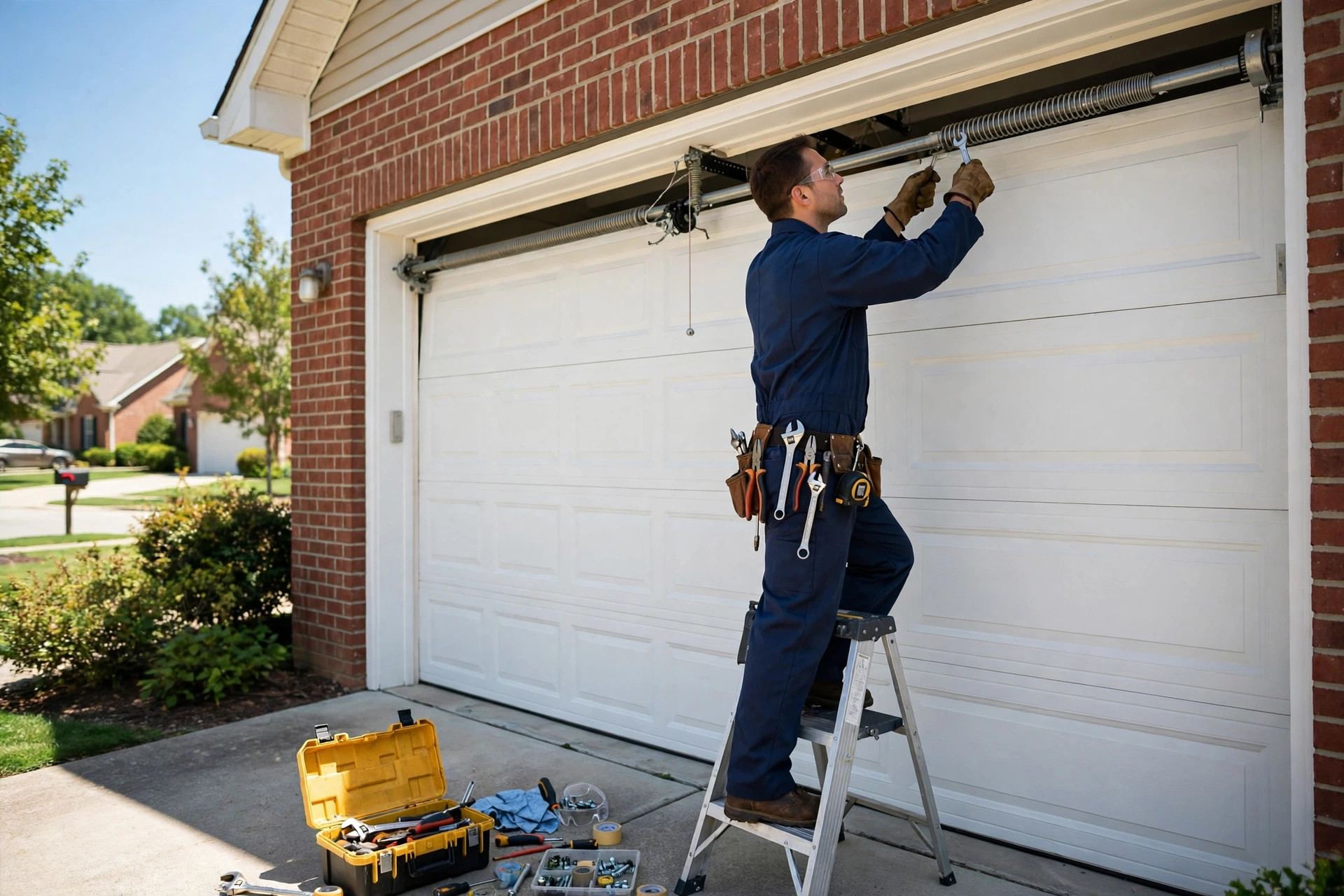
This guide breaks down exactly what you're paying for, what a fair quote looks like, the warning signs of an inflated one, and the one upgrade — high-cycle springs — that's genuinely worth the money for many households.
In This Guide
- The Cost Breakdown: Parts, Labor and the Service Call
- Torsion vs. Extension Spring Pricing
- Why Replacing Both Springs Costs Less Than You Think
- High-Cycle Springs: The Upgrade Worth Considering
- Signs of a Fair Quote (and Red Flags)
- How Spring Size Changes the Price
- What If a Spring Broke Twice in Two Years?
- Timing the Replacement: A Seasonal Strategy
Key Takeaways
- Springs themselves are not expensive parts.
- Torsion springs — mounted on the shaft above the door — are the modern standard and cost slightly more: they're heavier-duty, last longer (typically 10,000+ cycles), and give smoother operation.
- If your door has two springs, they were installed together and have lived identical lives.
- Standard springs are rated for about 10,000 cycles.
- A fair quote names the spring type and size, states whether it's one spring or a pair, includes balancing and a safety test, and puts the warranty in writing.
- Springs are priced by their dimensions because dimensions are capacity.
- A second early failure is a diagnosis problem, not bad luck.
- Springs don't consult your calendar, but if yours are aging rather than broken, you get to choose the timing — and timing has a price.
How to use this guide: find your situation in the tables, note the fair range, then compare it line by line with any quote you receive — including ours. If a number falls outside the ranges here, the right response isn't panic; it's one question: 'what's different about my door?' A good company answers it in specifics — door weight, part specification, timing — and a vague answer is itself the answer. When you're ready for an exact figure, call (210) 964-8892: our quotes are flat, written from the same data as this guide, and confirmed before any work begins.
The Cost Breakdown: Parts, Labor and the Service Call
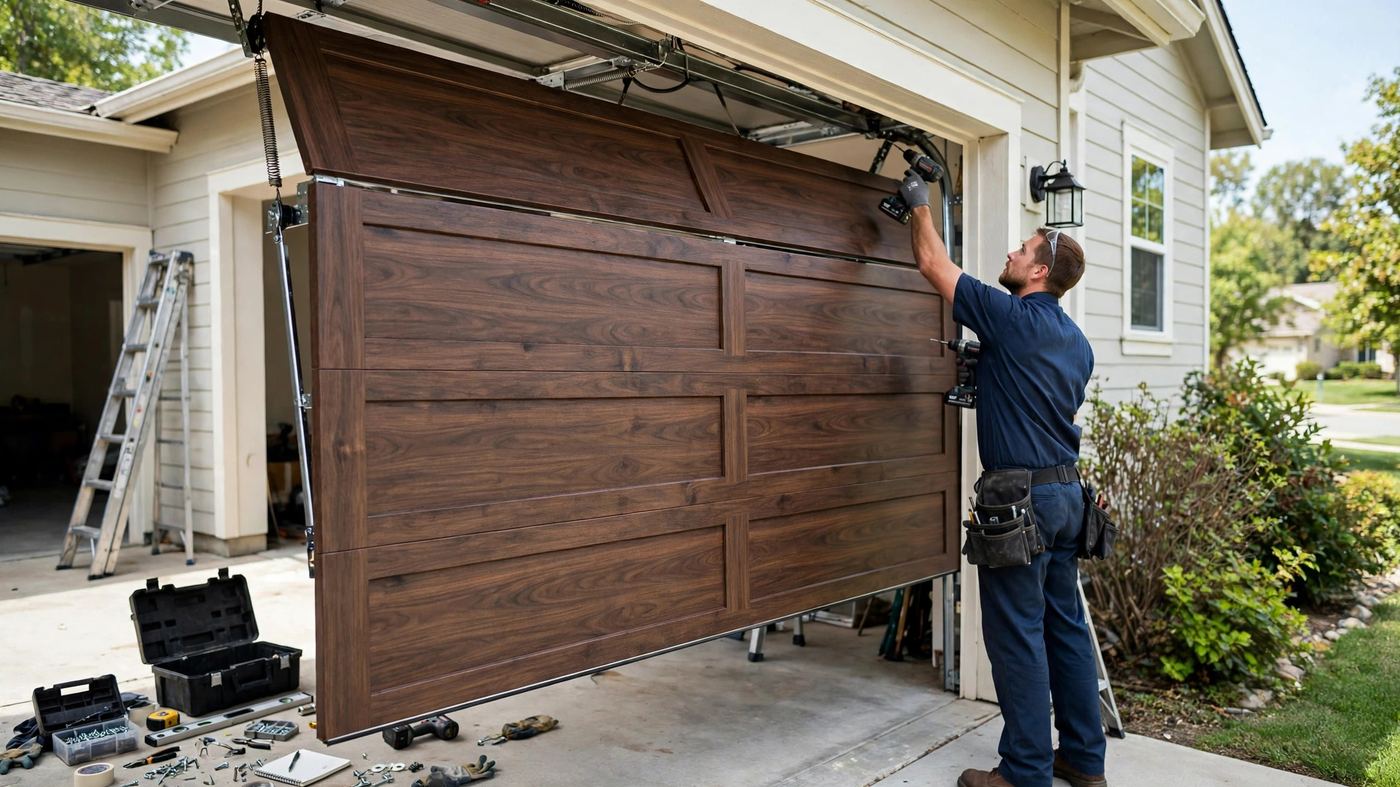
Springs themselves are not expensive parts. A standard torsion spring runs roughly $30-$80 wholesale depending on size; extension springs cost less. What you're really buying is the labor and expertise around a genuinely dangerous component: releasing and re-winding tension safely, sizing the spring to your door's exact weight, and balancing the finished job. Labor typically accounts for $75-$200 of the total.
Most companies bundle everything into one flat quote, sometimes after a service call fee ($50-$100) that's credited toward the repair. A typical single torsion spring replacement lands at $120-$250 total; a matched pair runs $200-$350. If your quote for a standard residential spring job is pushing past $400 without additional work (cables, bearings, drums), get a second quote — that's above the normal market band.
Torsion vs. Extension Spring Pricing
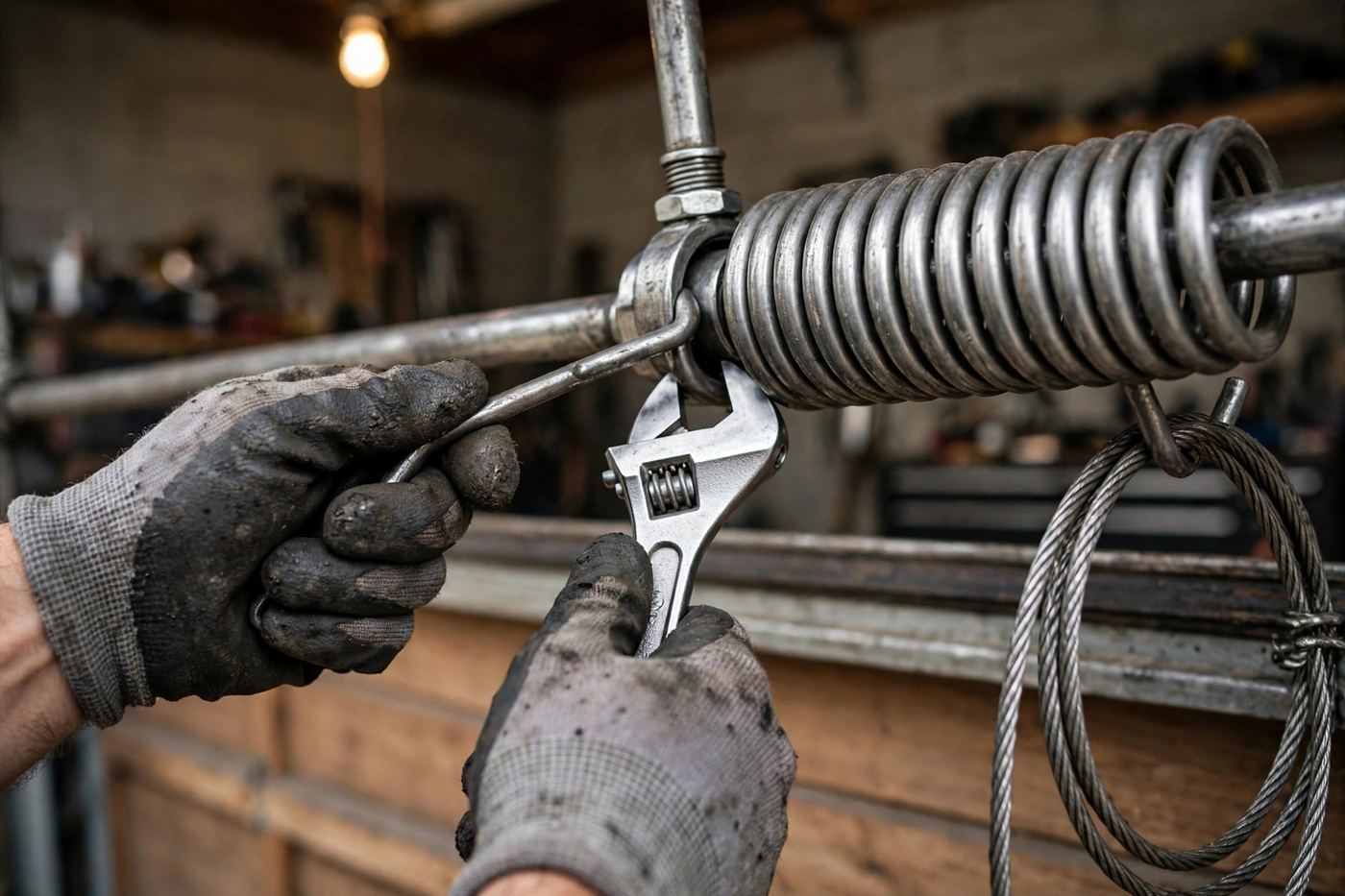
Torsion springs — mounted on the shaft above the door — are the modern standard and cost slightly more: they're heavier-duty, last longer (typically 10,000+ cycles), and give smoother operation. Extension springs, which stretch along the side tracks, are cheaper parts and common on older single doors; replacing the pair usually runs $120-$280 including the safety cables that should always accompany them.
Converting an extension-spring door to a torsion system costs more upfront ($300-$500) but pays back in longevity, safety and smoother operation — worth considering if your extension system needs full renewal anyway. Ask your technician to price both paths if your door is a conversion candidate.
Why Replacing Both Springs Costs Less Than You Think
If your door has two springs, they were installed together and have lived identical lives. When one snaps, the other's remaining life is measured in months, not years. Replacing both in one visit typically adds only $60-$120 over a single-spring job — versus a second $150+ service visit later, plus the inconvenience of another dead door (springs rarely break at convenient times).
There's a mechanical argument too: a new spring beside a tired one can't balance perfectly, and imbalance is what wears opener gears and cables. The pair replacement is one of the few upsells in this industry that's mathematically on the customer's side.
High-Cycle Springs: The Upgrade Worth Considering
Standard springs are rated for about 10,000 cycles. A household opening the door 4 times a day burns through that in roughly 7 years. High-cycle springs — wound from larger wire — are rated 25,000 to 50,000 cycles and typically add $50-$150 to the job. For a two-car household where the garage is the main entrance, that's the difference between replacing springs twice a decade and once in 15+ years.
The math favors high-cycle springs if you plan to stay in the home, use the garage as your primary entrance, or simply never want to think about springs again. If you're selling within two years, standard springs are fine — take the savings.
Signs of a Fair Quote (and Red Flags)
A fair quote names the spring type and size, states whether it's one spring or a pair, includes balancing and a safety test, and puts the warranty in writing. The technician should measure your existing spring and weigh or calculate the door — sizing by eyeball alone is how doors end up with wrong springs.
Red flags: a quote that triples after the technician arrives without a clear mechanical explanation; pressure to decide 'right now'; spring prices quoted per-spring with labor, balancing and 'system fees' stacked afterward; and any company that won't confirm the total before starting. Spring replacement is a commodity repair with tight market pricing — $120-$350 is the band, and honest companies live inside it.
How Spring Size Changes the Price
Springs are priced by their dimensions because dimensions are capacity. A spring's wire diameter, inside diameter and length together determine how much weight it can balance and how many cycles it survives. Doors that are taller, wider, insulated or built from wood need springs with more wire in them — and wire is the cost. This is why a spring for a light 8x7 single door sits at the bottom of the range while a spring for a heavy 16x8 insulated door sits at the top, even though the labor is nearly identical.
It also explains a pricing pattern that confuses people: the spring itself might be a $60 part in a $220 job. The remainder is the skilled, insured labor of handling stored energy safely, plus balancing and calibration. When comparing quotes, compare the installed total and the cycle rating — the two numbers that determine what you actually bought — rather than fixating on the part price alone.
What If a Spring Broke Twice in Two Years?
A second early failure is a diagnosis problem, not bad luck. The usual causes: an undersized spring installed the first time (chosen by eyeball instead of by door weight), a door that gained weight (insulation added, waterlogged wood sections), worn bearings adding friction the spring must overcome, or a genuinely high cycle count — a household running 8+ cycles a day can consume a 10,000-cycle spring in about three and a half years.
If you're facing a repeat failure, ask the technician to weigh the door and state the new spring's cycle rating in writing. Upgrading to a high-cycle spring and correcting any weight or friction issue ends the pattern. Repeating the same standard spring into the same conditions is how a $200 repair becomes a subscription.
Timing the Replacement: A Seasonal Strategy
Springs don't consult your calendar, but if yours are aging rather than broken, you get to choose the timing — and timing has a price. The industry's crunch periods are the first hard freeze and the January peak, when every tired spring in the state fails in the same fortnight and schedules fill. A spring replaced proactively in a mild October week books easily, sometimes at the most flexible scheduling of the year.
The condition check that justifies acting early is simple: age past 7-8 years on standard springs, visible coil stretching or rust pitting, or a door that's grown perceptibly heavier at the manual lift test. Any one of those on a fall inspection converts a future emergency into a planned $120-$350 appointment.
There's a household-logistics angle too: the week the spring breaks is statistically the week the car absolutely must move — guests arriving, a trip, a work deadline. Planned replacement lets you pick the Tuesday nothing depends on. In garage doors, as in most of home maintenance, the cheapest emergency is the one that never happens.
Spring Replacement Price Reference (2026)
| Item | Cost / Rating | Notes |
|---|---|---|
| Single torsion spring | $120-$250 | Standard single or light double door |
| Torsion spring pair | $200-$350 | Recommended — matched age and balance |
| Extension spring pair | $120-$280 | Includes safety cables |
| High-cycle upgrade | +$50-$150 | 25,000-50,000 cycle rating |
| Extension-to-torsion conversion | $300-$500 | Full system change |
Frequently Asked Questions
Can I replace a garage door spring myself and save the labor?
Technically yes; sensibly, no. Torsion springs store enough energy to cause severe injury when winding bars slip, and it's one of the top DIY injury sources in the home. The labor portion is modest, the risk is not. This is the repair professionals are for.
How do I know if I need one spring or two replaced?
If your door has two springs and one broke, replace both — they share the same cycle count. Single-spring doors obviously need just the one. Your inspection will confirm the setup and the surviving spring's condition.
Does the quote include balancing?
It should. A spring job isn't finished until the door holds position at halfway and lifts evenly. Any quote from us includes tensioning, balancing, and opener force checks.
How long does spring replacement take?
45-90 minutes for most doors, including the safety checks. Same-day service is typical because springs are standard truck stock.
Are bigger springs always better?
No — correctly sized springs are better. An oversized spring makes the door fly up and strain hardware; undersized makes the opener do the lifting and die young. Size follows door weight and geometry, not preference.
Does homeowners insurance cover a broken garage door spring?
Almost never — springs are wear items, and wear is a maintenance responsibility, not a covered peril. Insurance enters the picture when a covered event (a vehicle impact, storm damage) breaks the door; the spring alone, failing from fatigue, is on the homeowner. The good news is it's one of the most affordable major repairs on the house.
Related Services
Broken Spring Replacement
Snapped torsion or extension spring? We replace springs in matched pairs, sized exactly to your door's weight — same-day.
Learn more →Garage Door Repair
Complete diagnosis and repair for doors that won't open, close, balance or seal — most repairs finished in a single visit.
Learn more →Garage Door Maintenance & Tune-Up
A full tune-up: balance test, lubrication, hardware tightening, sensor and safety checks — the cheapest way to avoid a breakdown.
Learn more →← All garage door guides · Costs & pricing hub
Garage Door Stuck? We Can Fix It Today.
Same-day appointments and 24/7 emergency service across all 50 of our service cities. Upfront price before work starts — no surprises on the invoice.
(210) 964-8892 ☎ Call Now — Open 24/7