The reassuring headline: most off-track doors are fully repaired the same day for $125-$400, panels intact, when they're not forced first.
In This Guide
Key Takeaways
- Keep everyone — especially children and pets — out of the garage and away from the door.
- Broken lift cable — the champion cause.
- The technician first secures the door with clamps and supports so it cannot drop, then brings spring tension under control.
- Off-track repair runs $125-$400 for most residential doors.
- Because derailments have causes, they're preventable: replace cables at the first sign of fraying (look at the bottom brackets quarterly), maintain rollers before wheels crack, keep tracks clear and never store long items leaning into the door's path, and treat any new grinding or uneven travel as a service call rather than background noise.
- From the driveway, an off-track door looks like a geometry problem.
- For a straightforward derailment — cause identified, parts on the truck, panels sound — expect the door back in service within one to two hours of arrival.
- A freshly reset door deserves a week of light attention.
How to use this guide: work the checks in the order given — they're sequenced from the most common and cheapest causes to the rarest and most involved, which is exactly how a technician's diagnosis proceeds. Stop at the step that solves it, and stop entirely at anything involving springs, cables or a door that's crooked or off its tracks: those are professional jobs, and this guide will tell you plainly when you've reached one. If you reach the end without a fix, call (210) 964-8892 and tell the dispatcher which steps you completed — you'll skip half the diagnosis and get the right parts on the first truck.
The First Ten Minutes: Secure, Don't Touch
Keep everyone — especially children and pets — out of the garage and away from the door. Unplug the opener so nobody can activate it accidentally, and if the opener has a lock/vacation mode, engage it too. Do not pull the red release cord on a crooked door: the remaining spring may be the only thing holding it, and releasing the opener's hold can let it shift or drop.
Photograph the door from inside and out (useful for the dispatcher and any insurance claim if a vehicle was involved), and note anything you saw or heard — a bang before it stopped (cable or spring), a bump from a car, an obstruction in the track. Then call (210) 964-8892. If the door is stuck open and the home is unsecured, say so: that's emergency priority.
Why Doors Derail: The Usual Suspects
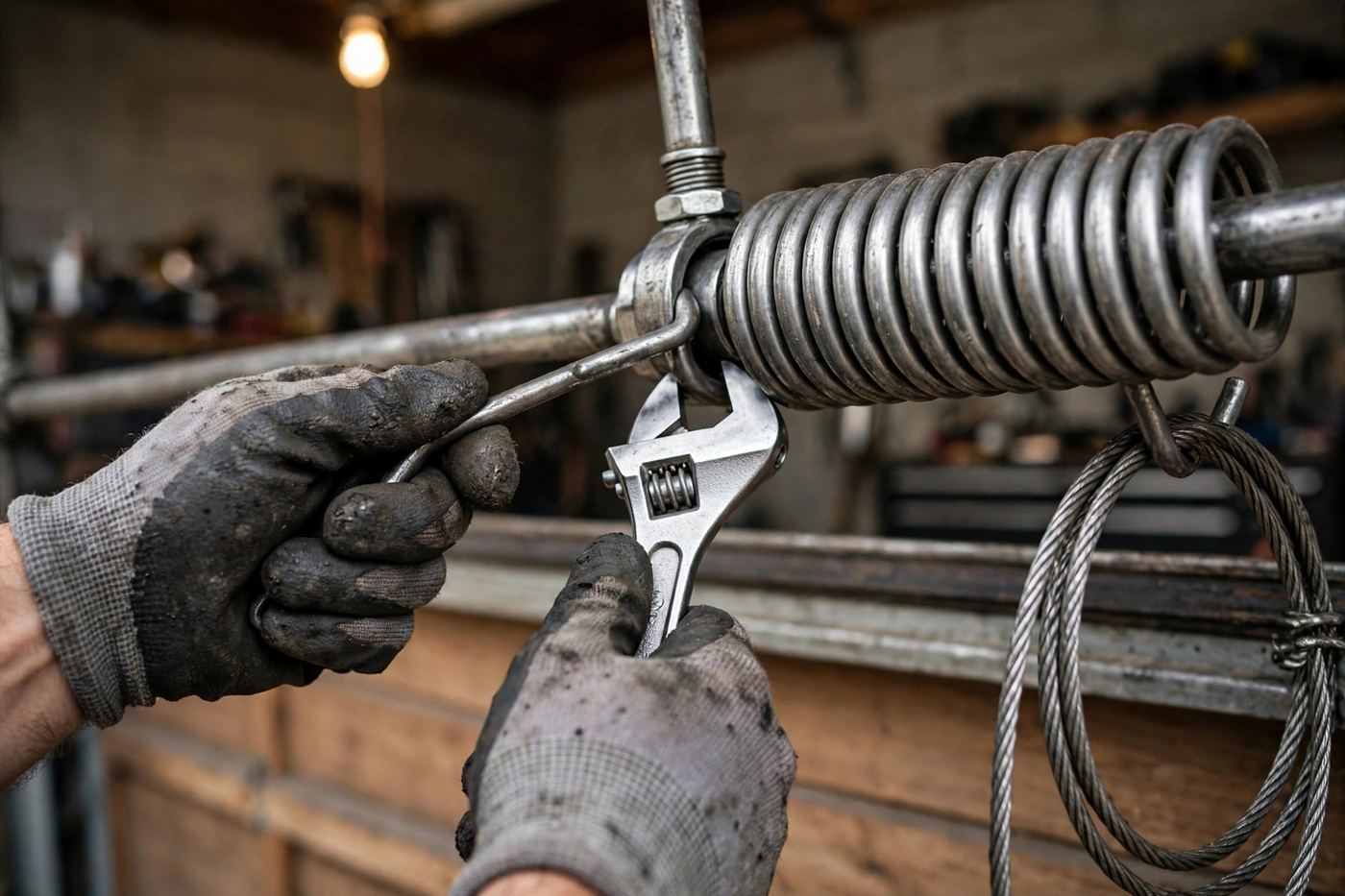
Broken lift cable — the champion cause. One side loses lift, the door racks sideways in the opening, and rollers lever out of the track under the opener's continued push. Broken spring: same imbalance mechanism. Impact: a bumper or even a ladder strike bends a vertical track enough for rollers to climb out. Worn rollers: a cracked wheel or bent stem walks out of the track on its own, often preceded by weeks of grinding noise. Obstruction: something in the track stops one side while the drive keeps pushing the other.
Notice the pattern: in four of the five causes, the derailment is a symptom. The door didn't fail — something failed and took the door with it. That distinction decides whether your repair lasts a week or a decade.
What Professional Repair Actually Involves
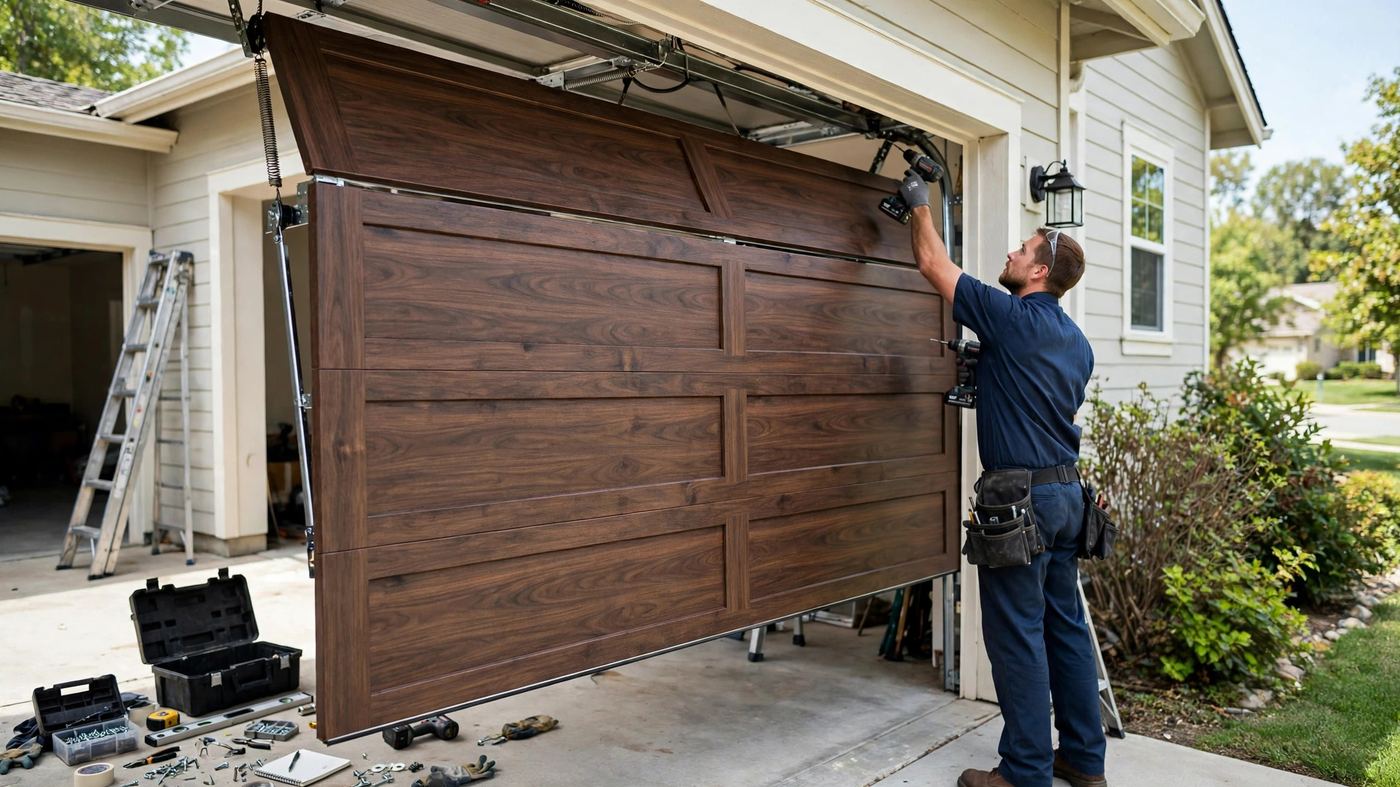
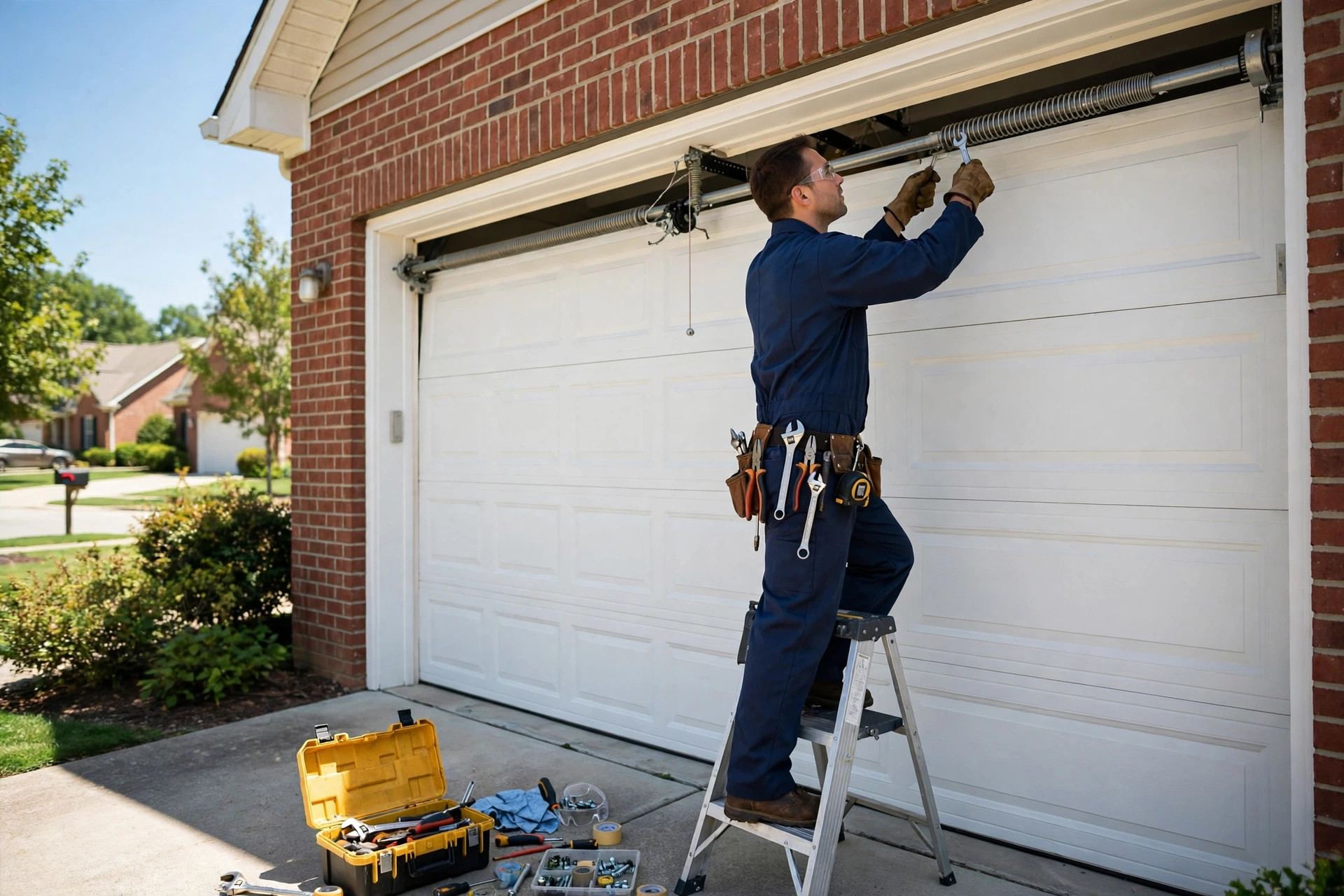
The technician first secures the door with clamps and supports so it cannot drop, then brings spring tension under control. The failed components — cables, spring, rollers, bent track — are identified and replaced. Only then is the door squared in the opening and each roller walked back into its track, one at a time, in sequence. Bent track is straightened or the damaged length replaced; brackets are re-anchored into structural framing.
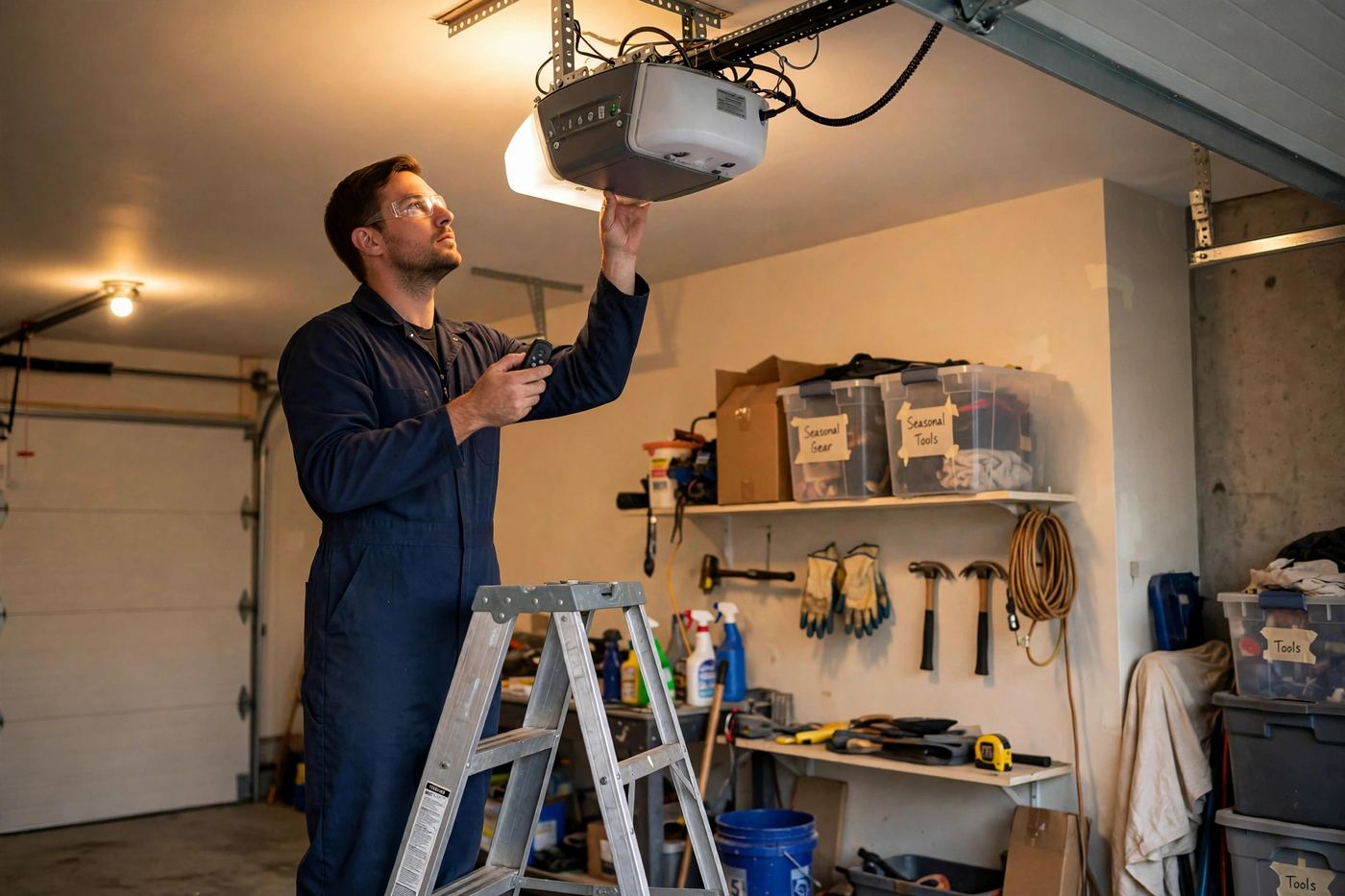
After the reset: the door is leveled (the gaps around it even), balanced at halfway, run through repeated full cycles, and the opener's travel and force recalibrated. The safety systems get tested last. Total time on site is typically one to two hours when panels are undamaged.
The Cost Question, Answered Honestly
Off-track repair runs $125-$400 for most residential doors. The low end is a clean reset plus the causative part — a cable pair at $80-$185, for instance. Track section replacement, a full roller set, or a spring moves the total up. Panel damage is the wildcard: a creased or torn section adds $250-$800, which is precisely why not forcing the door matters — most panel damage in derailments happens after the derailment, during well-meaning attempts to shove the door home.
Your quote should itemize the reset and the cause separately. If a company quotes a reset without asking what caused it, they're selling you the same failure twice.
Preventing the Sequel
Because derailments have causes, they're preventable: replace cables at the first sign of fraying (look at the bottom brackets quarterly), maintain rollers before wheels crack, keep tracks clear and never store long items leaning into the door's path, and treat any new grinding or uneven travel as a service call rather than background noise.
An annual tune-up covers all of it — cables inspected strand by strand, rollers spun by hand, balance verified. At $75-$150 it's the cheapest derailment insurance that exists, and it catches the frayed cable in October instead of the off-track door in January.
What the Technician Sees That You Shouldn't Touch
From the driveway, an off-track door looks like a geometry problem. From the technician's side, it's an energy problem: the spring system may still be fully tensioned and connected to a door that's lost its guides, which means stored energy with an unpredictable release path. The first tools out of the truck are clamps and supports, not pry bars — the door gets pinned in space before a single component is loosened, and tension is unwound in a controlled sequence.
This is also why 'just resetting' a door without the inspection is malpractice: the reset itself is the easy half-hour. The professional product is the sequence around it — stabilize, diagnose, repair the cause, reset, rebalance, retest — in that order, every time.
How Long You'll Be Without the Door
For a straightforward derailment — cause identified, parts on the truck, panels sound — expect the door back in service within one to two hours of arrival. The delays come from the wildcards: a panel that must be sourced, a track section that's a special order, or structural damage to the opening's framing from a hard impact. In those cases the visit ends with the opening secured and a written plan, not with a shrug.
If the door is your home's main security boundary, say so when you call: dispatch will sequence the visit to end with a secured opening even if full repair needs a second trip. A door hanging open over a household is treated as the emergency it is, at any hour.
After the Repair: The First Week
A freshly reset door deserves a week of light attention. Run it through a full cycle once a day and watch the reveal — the gaps around the door should stay even, and travel should be smooth through the curve where the derailment happened. Listen at the spot: new grinding at a repaired position means a roller or track seating issue worth a warranty call while the visit is fresh.
Check that nothing migrated back into the track's path — derailments caused by stored items repeat when the item returns to its spot. If a vehicle caused the incident, look honestly at the geometry that allowed it (tight turn, poor sightline, a track guard that would help) — a $30 track guard is cheaper than a second reset.
Finally, file the invoice. It names the causative part and the work done, and it's your documentation if an insurance claim follows or if the same corner of the door ever misbehaves again. A repaired derailment with the cause fixed should be a once-a-decade event; the paperwork is how you prove the pattern if it isn't.
Off-Track Causes & Typical Fixes
| Item | Cost / Rating | Notes |
|---|---|---|
| Broken lift cable | Cable pair + reset | $80-$185 + reset labor |
| Broken spring | Spring(s) + reset | $120-$350 + reset labor |
| Worn / popped roller | Roller set + reset | $120-$250 + reset labor |
| Bent track (impact) | Straighten or replace section | $150-$400 |
| Total typical range | Cause + cure combined | $125-$400 most doors |
Frequently Asked Questions
Can I just push the rollers back into the track?
No — that's how doors fall and panels get destroyed. The door is under spring tension and partially unsupported; re-seating rollers is a sequenced job done with the door clamped and tension controlled.
How much does off-track repair cost?
Typically $125-$400 including the causative repair (cable, spring, roller or track work). Panel damage, when present, adds to that — and usually results from forcing the door before we arrive.
My door is off track and stuck open. Is that an emergency?
Yes — your home is unsecured. Call (210) 964-8892 any time; we'll repair it or secure the opening. Lock the interior door to the house and move valuables out of sight while you wait.
Will my door be damaged permanently?
In most derailments caught early, no — panels survive, and the repair is parts and labor only. Damage concentrates in cases where the door was forced or fell, which is avoidable.
What caused my door to come off track?
Most often a broken lift cable; also broken springs, worn rollers, track impacts and obstructions. The repair includes identifying and fixing the specific cause on your door.
Will my opener be damaged after an off-track event?
Possibly — if it kept driving against the derailed door, its force limiter usually trips first, but gears and boards can suffer. Part of the repair visit is testing the opener under the restored door and recalibrating its force and travel. If it was damaged, you'll get the honest comparison between its repair and replacement.
Related Services
Off-Track Garage Door Repair
Door jumped its tracks or hanging crooked? We secure it, find the cause, and reset rollers and tracks safely.
Learn more about off-track garage door repair →Garage Door Cable Repair
Snapped or frayed lift cables leave doors crooked and dangerous. We replace cables in pairs with drums inspected and reset.
Learn more about garage door cable repair →Garage Door Repair
Complete diagnosis and repair for doors that won't open, close, balance or seal — most repairs finished in a single visit.
Learn more about garage door repair →← All garage door guides · Costs & pricing hub
Garage Door Stuck? We Can Fix It Today.
Same-day appointments and 24/7 emergency service across all 50 of our service cities. Upfront price before work starts — no surprises on the invoice.
(210) 964-8892 ☎ Call Now — Open 24/7