Print it, tape it inside the garage, and initial the boxes. The door will repay the attention in silence and longevity.
In This Guide
- Monthly: The Five-Minute Visual (No Tools)
- Seasonally: Lubrication and Hardware
- Annually: The Professional Tune-Up Items
- Climate-Specific Add-Ons
- What Never Goes on a DIY Checklist
- The Maintenance Log: Five Lines That Save Hundreds
- Tools & Supplies Worth Owning
- Teaching the Household: Kids, Cars and the Door
Key Takeaways
- Watch one full open and close cycle and simply notice: does the door travel smoothly or shudder at a point? Does it sound the same as last month? Look at the cables where they meet the bottom brackets — fraying strands or rust there are your earliest failure warnings.
- Twice a year (spring and fall are the natural anchors), lubricate: hinge pivots, roller stems and bearings, and the spring coils, using a silicone or lithium garage-door spray.
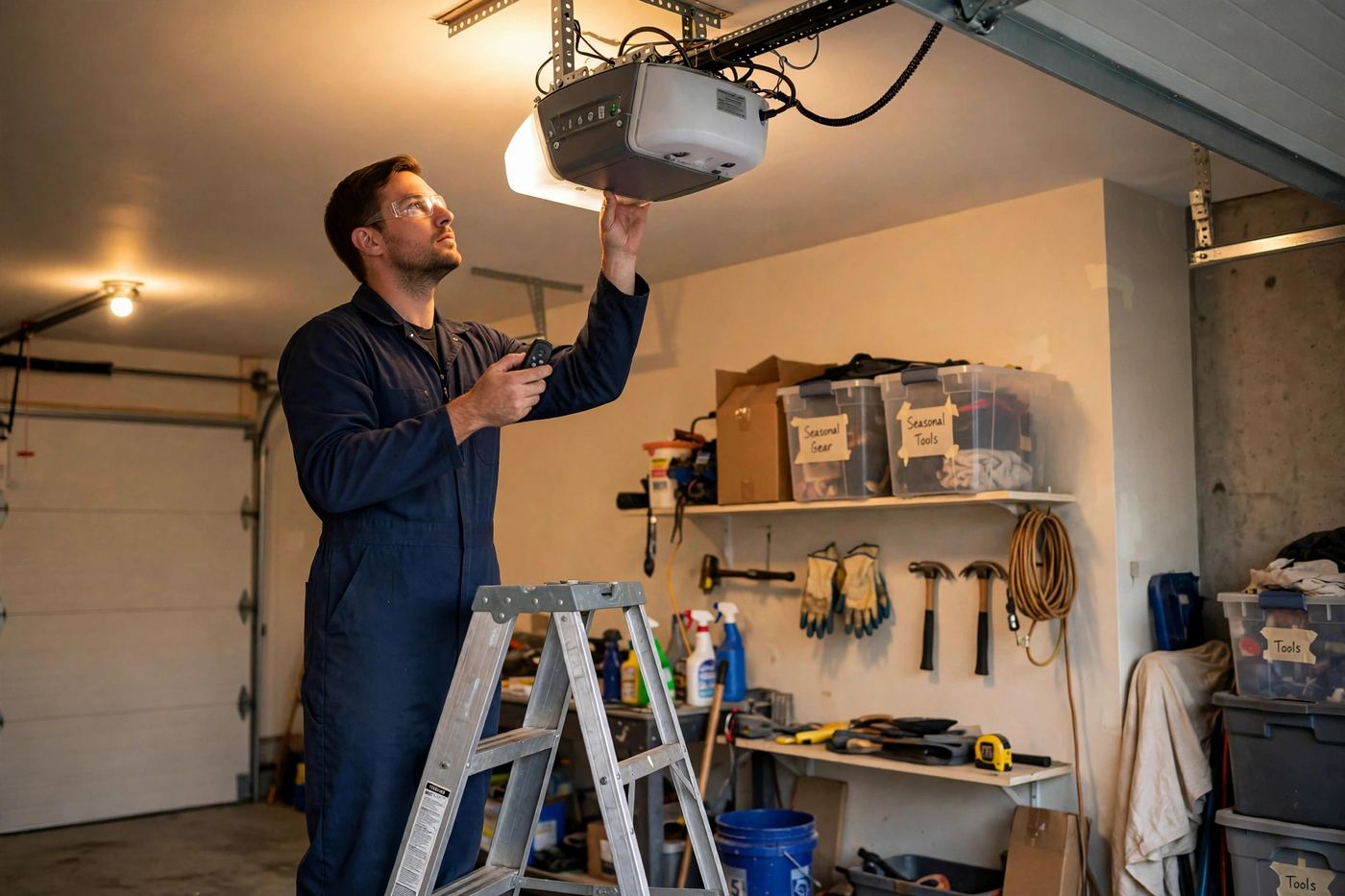
- Once a year, these belong to a technician: spring tension and balance adjustment (the door must hold at halfway — this calibrates the opener's workload and predicts spring life); cable inspection strand-by-strand including drum seating; bearing plate check; opener force and travel recalibration; gear and belt/chain condition; and the end-to-end safety verification with documented results.
- Coastal and humid regions (our California coast and Georgia/Tennessee service areas in their wet seasons): add a quarterly rust check on cables, springs and bottom-section edges, and consider stainless cables at replacement time.
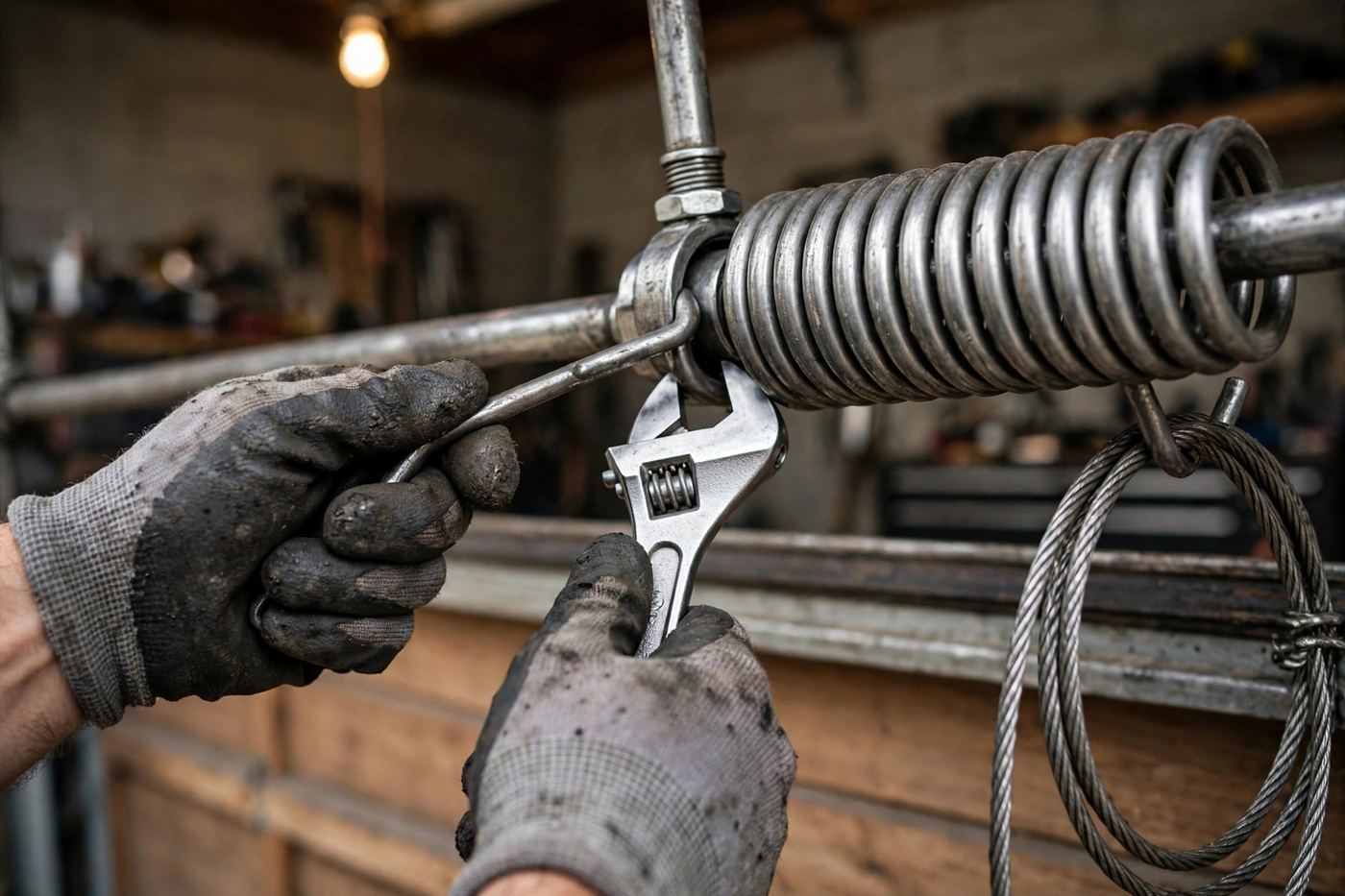
- Spring tensioning or replacement.
- Keep a simple log — a notebook in the garage or a note on your phone: date, what you checked, what you noticed, what was done.
- A homeowner's garage door kit fits in a shoebox: a can of silicone or lithium garage-door lubricant, a socket wrench set for hardware tightening, a soft cloth for sensor lenses, a level for eyeballing door alignment, and touch-up paint matched to the door.
- The best checklist fails if only one person in the house knows it.
How to use this guide: work the checks in the order given — they're sequenced from the most common and cheapest causes to the rarest and most involved, which is exactly how a technician's diagnosis proceeds. Stop at the step that solves it, and stop entirely at anything involving springs, cables or a door that's crooked or off its tracks: those are professional jobs, and this guide will tell you plainly when you've reached one. If you reach the end without a fix, call (210) 964-8892 and tell the dispatcher which steps you completed — you'll skip half the diagnosis and get the right parts on the first truck.
Monthly: The Five-Minute Visual (No Tools)
Watch one full open and close cycle and simply notice: does the door travel smoothly or shudder at a point? Does it sound the same as last month? Look at the cables where they meet the bottom brackets — fraying strands or rust there are your earliest failure warnings. Check that both sensor lights are lit and steady. Glance at the bottom seal: is it intact, or are there gaps, tears and daylight?
Test the auto-reverse monthly — it's a safety system protecting your family, and it's a 30-second test: place a roll of paper towels (or a 2x4 laid flat) on the floor in the door's path and close it; the door must reverse on contact. Then pass your hand through the sensor beam during a close; it must reverse too. Any failure: stop using the opener until it's serviced.
Seasonally: Lubrication and Hardware
Twice a year (spring and fall are the natural anchors), lubricate: hinge pivots, roller stems and bearings, and the spring coils, using a silicone or lithium garage-door spray. Wipe excess so it doesn't drip on the car. Never lubricate the tracks — clean them with a damp cloth instead; rollers must roll in clean, dry tracks, not slide through grease and grit.
Tighten hardware with a socket wrench: hinge bolts, track bracket nuts, and the opener's mounting. Doors vibrate fasteners loose as a way of life. Wash the door's exterior, touch up paint chips on steel doors before rust starts (especially the bottom section's lower edge), and clear the threshold and weep areas so water never ponds against the bottom seal. In snowy climates, keep ice from bonding the seal to the floor — a door frozen down will strain the opener and can tear the seal free.
Annually: The Professional Tune-Up Items
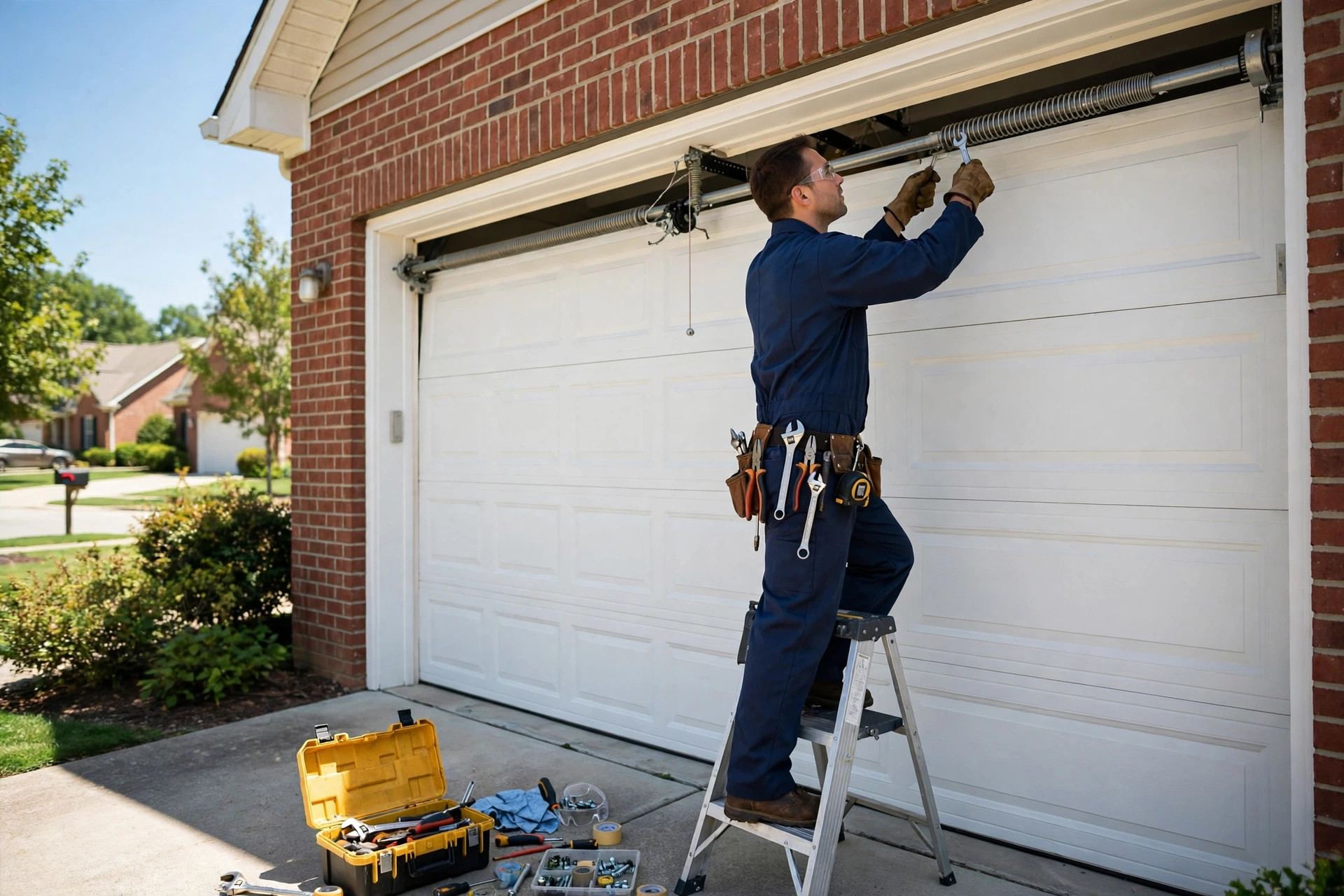
Once a year, these belong to a technician: spring tension and balance adjustment (the door must hold at halfway — this calibrates the opener's workload and predicts spring life); cable inspection strand-by-strand including drum seating; bearing plate check; opener force and travel recalibration; gear and belt/chain condition; and the end-to-end safety verification with documented results. A professional tune-up runs $75-$150 and typically takes under an hour.
The output you want is a condition report: what was adjusted, what's wearing and on what timeline, and what (if anything) deserves pre-emptive replacement. That report, kept year over year, is how a door reaches 25+ years without a single emergency.
Climate-Specific Add-Ons
Coastal and humid regions (our California coast and Georgia/Tennessee service areas in their wet seasons): add a quarterly rust check on cables, springs and bottom-section edges, and consider stainless cables at replacement time. Extreme heat (Texas, inland valleys): check the bottom seal and panel finish each summer — heat cooks rubber seals and chalks paint; opener capacitors also age faster in hot garages, so mention any sluggish starts at the annual visit.
Cold climates (New England, the Midwest): before winter, confirm the door isn't freezing to the floor (a silicone-treated seal helps), keep tracks free of ice, and have tired springs replaced in the fall — the first hard freeze is the year's top spring-killer. Storm regions: verify wind-load hardware is intact and know how to lock the door down manually if power fails.
What Never Goes on a DIY Checklist
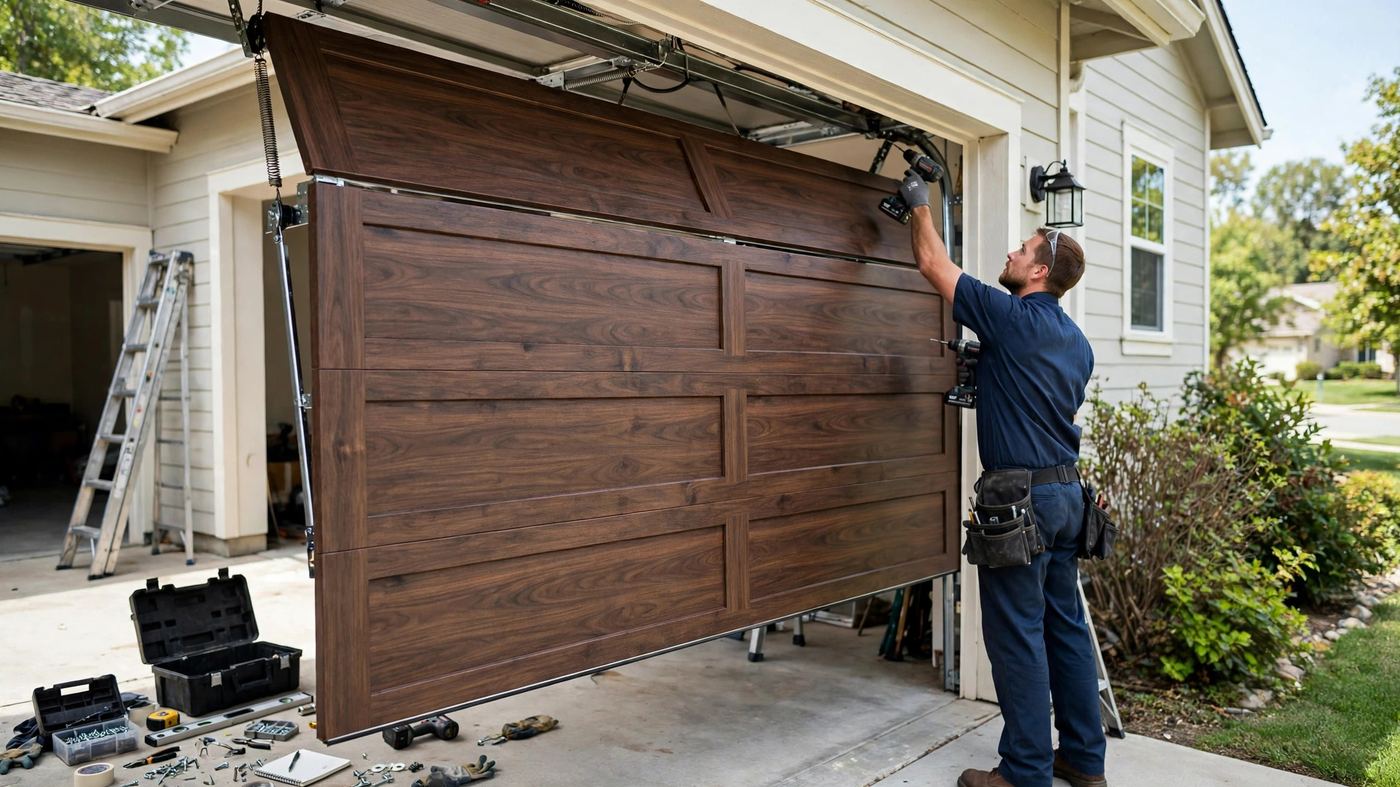
Spring tensioning or replacement. Cable replacement. Track realignment beyond wiping them clean. Anything involving the bottom brackets, which are under full spring load. These four items account for the overwhelming majority of garage door injuries, and they are precisely the items the annual professional visit exists to cover — the economics and the anatomy both argue the same way.
Everything else on this page is genuinely yours to do, and it matters: the homeowner who watches, listens and tests monthly gives the professional a door whose problems are all small ones. That's the entire secret of the 30-year garage door.
The Maintenance Log: Five Lines That Save Hundreds
Keep a simple log — a notebook in the garage or a note on your phone: date, what you checked, what you noticed, what was done. Its power shows at year two, when 'the door sounds different' becomes 'the rumble started in March, the week after the hinge bolt loosened' — a trend line instead of a feeling. Technicians diagnose faster from logs, and warranty conversations go better with dates.
The log is also your pre-sale asset and your memory across the years when nothing goes wrong — which is precisely when maintenance gets skipped. Doors don't need attention often; they need it regularly. The log is how 'regularly' survives a busy household.
Tools & Supplies Worth Owning
A homeowner's garage door kit fits in a shoebox: a can of silicone or lithium garage-door lubricant, a socket wrench set for hardware tightening, a soft cloth for sensor lenses, a level for eyeballing door alignment, and touch-up paint matched to the door. Total cost is under $50, and it covers every DIY item on this checklist.
What deliberately isn't in the box: winding bars, cable tools, and spring clamps. Their absence is the safety system. The moment a task seems to need them, the task has crossed into professional territory — springs, cables and bottom brackets are the three items this checklist intentionally never assigns to you.
Teaching the Household: Kids, Cars and the Door
The best checklist fails if only one person in the house knows it. The household rules are short and worth a two-minute family briefing: the door is never a toy — no riding it, no racing under it while it closes, no hanging on it. Remotes are not toys either; a remote pressed for fun is a several-hundred-pound machine operated blind.
Teach the sound rule: anyone who hears the door bang, grind or strain reports it the same day, the way you'd report a strange smell. And teach the two sights: a cable hanging loose or a gap in the spring coil means the door is parked until a professional says otherwise — no 'one more cycle to get the car out' exceptions, because that cycle is the one that drops doors.
For new drivers in the house, add the driveway rule: the door isn't fully up until it's fully up — a surprising share of panel damage is a bumper meeting a door still traveling. Panels cost $250-$800; patience costs four seconds.
Maintenance Schedule Summary
| Item | Cost / Rating | Notes |
|---|---|---|
| Monthly | Watch a cycle; test auto-reverse & sensors | 5 minutes, no tools |
| Seasonally (2x/yr) | Lubricate pivots & springs; tighten hardware; wash door | 15 minutes |
| Annually | Professional tune-up: balance, cables, bearings, calibration | $75-$150 |
| Every 2-3 years | Replace bottom seal if compressed or torn | $60-$140 |
| At 7-10 years | Expect spring replacement window; budget for it | $120-$350 |
Frequently Asked Questions
What lubricant should I use on my garage door?
A silicone-based or white-lithium spray labeled for garage doors. Avoid WD-40 as a primary lubricant (it's a solvent that leaves parts dry) and never grease the tracks.
How do I test if my door is balanced?
Opener disconnected, door halfway up: it should stay in place with minimal drift. Slamming down or shooting up means the springs need professional adjustment — schedule it rather than compensating with opener force.
How often should springs and cables be inspected?
Visually by you every month (cables at the brackets, springs for rust or coil gaps); professionally once a year as part of the tune-up.
Is a professional tune-up worth it if the door seems fine?
The tune-up's value is precisely in the 'seems fine' phase — balance drift, cable fray and bearing wear are invisible to casual use until they become failures. At $75-$150 versus $125-$400 repairs, the math holds.
My door froze to the ground. What do I do?
Don't force the opener — you'll tear the seal or strain the unit. Break the ice bond gently with warm (not boiling) water along the seal line, dry, and treat the seal. If the door strains or the seal tore, book a service visit.
What's the single most skipped maintenance item?
The auto-reverse safety test. It takes 30 seconds monthly, it's the only item on the list that protects people rather than the door, and almost nobody does it. Place a paper-towel roll in the door's path, close the door, and confirm it reverses on contact. If it doesn't, the opener comes off duty until it's serviced.
Related Services
Garage Door Maintenance & Tune-Up
A full tune-up: balance test, lubrication, hardware tightening, sensor and safety checks — the cheapest way to avoid a breakdown.
Learn more →Roller & Hinge Repair
Grinding, rattling, shuddering door? Worn rollers and hinges are the usual culprits — replaced as a set for a door that glides.
Learn more →Garage Door Repair
Complete diagnosis and repair for doors that won't open, close, balance or seal — most repairs finished in a single visit.
Learn more →← All garage door guides · Costs & pricing hub
Garage Door Stuck? We Can Fix It Today.
Same-day appointments and 24/7 emergency service across all 50 of our service cities. Upfront price before work starts — no surprises on the invoice.
(210) 964-8892 ☎ Call Now — Open 24/7