The one-sentence version: if any living space touches your garage, insulation is worth it; if the garage stands alone and stores only cars and tools, it's optional — and the details below will tell you which side of that line you're on.
In This Guide
- R-Value, Translated
- Construction Tiers: Single, Double and Triple Layer
- DIY Retrofit Kits: The Honest Verdict
- Seals: The Other Half of the Insulation Story
- The Decision, by Situation
- Measuring What You Have Now
- Insulation and the Opener: The Weight Conversation
- Before-and-After: Measuring Whether It Worked
Key Takeaways
- R-value measures resistance to heat flow: higher is better, and the relationship is not linear in daily comfort — the jump from an uninsulated door (effectively R-1 to R-2) to a mid-insulated door (R-6 to R-9) is transformative, while the climb from R-12 to R-18 is a refinement.
- Single-layer doors are a steel skin over a frame — the budget tier, fine for detached garages.
- Foam-board and reflective-foil kits that fit into the door's section frames cost $100-$250 and genuinely help a single-layer door — expect a real but modest gain (a few R points at best, since the frames and joints remain thermal bridges), plus some noise damping.
- Insulating the sections while ignoring the perimeter is like insulating a wall and leaving the window open.
- Bedroom or living space above/beside the garage: insulated replacement (double-layer minimum, triple if the budget allows) — comfort, quiet and energy all argue yes, and you'll feel it daily.
- Identify your current door's construction before shopping: rap a section with a knuckle (a hollow ring is single-layer steel; a dull thud suggests insulation), open a section edge or look for a manufacturer label with model and R-value, and check whether sections feel uniformly cold on a winter morning — thermal imaging apps and even a hand can map the cold bridges at joints and frames.
- Every pound of insulation is a pound the springs must balance.
- Insulation projects deserve a verdict, so gather the 'before' numbers first: on a representative extreme day (the hottest afternoon or coldest morning of the season), note the garage temperature at door height, the temperature of the wall shared with the house, and — if a room sits above — whether its floor feels cold or its heating runs long.
How to use this guide: work the checks in the order given — they're sequenced from the most common and cheapest causes to the rarest and most involved, which is exactly how a technician's diagnosis proceeds. Stop at the step that solves it, and stop entirely at anything involving springs, cables or a door that's crooked or off its tracks: those are professional jobs, and this guide will tell you plainly when you've reached one. If you reach the end without a fix, call (210) 964-8892 and tell the dispatcher which steps you completed — you'll skip half the diagnosis and get the right parts on the first truck.
R-Value, Translated
R-value measures resistance to heat flow: higher is better, and the relationship is not linear in daily comfort — the jump from an uninsulated door (effectively R-1 to R-2) to a mid-insulated door (R-6 to R-9) is transformative, while the climb from R-12 to R-18 is a refinement. Manufacturers quote the section's center value; the whole-door installed value runs lower because of joints, windows and edges, so compare doors by construction, not just the biggest printed number.
What matters in practice: an insulated door in a Texas summer can keep a west-facing garage 10-20 degrees cooler than a single-layer steel door; in a New England winter it keeps the garage above the freeze damage zone and takes the chill off the room above. It also stops the oil-can effect — the drumming flex of thin steel — making insulated doors noticeably quieter in operation and in wind.
Construction Tiers: Single, Double and Triple Layer
Single-layer doors are a steel skin over a frame — the budget tier, fine for detached garages. Double-layer adds a polystyrene insulation core behind the steel (typically R-6 to R-8): the sweet spot for most attached garages. Triple-layer sandwiches insulation between two steel skins (R-12 to R-18 with polyurethane foam): the stiffest, quietest, most dent-resistant and most expensive construction, justified for finished garages, workshops, and rooms above that feel every degree and decibel.
Polyurethane insulation outperforms polystyrene per inch and bonds to the skins, adding structural rigidity; polystyrene panels are lighter and cheaper. When comparing quotes, 'insulated door' can mean any of these — ask for the layer construction and R-value explicitly.
DIY Retrofit Kits: The Honest Verdict
Foam-board and reflective-foil kits that fit into the door's section frames cost $100-$250 and genuinely help a single-layer door — expect a real but modest gain (a few R points at best, since the frames and joints remain thermal bridges), plus some noise damping. For a detached or mildly-attached garage in a moderate climate, a kit is a rational, cheap experiment.
The caveats matter: added weight. Insulation adds pounds the springs weren't sized for — a door that was balanced can become opener-straining after a kit install, sometimes enough to shorten opener life or overload tired springs. After any retrofit, do the balance test (door holds at halfway, opener disconnected); if it fails, the springs need professional adjustment to the new weight. And kits do nothing for the door's stiffness or the seal package — the two other places heat actually escapes.
Seals: The Other Half of the Insulation Story
Insulating the sections while ignoring the perimeter is like insulating a wall and leaving the window open. The bottom seal, the perimeter weatherstripping (top and sides), and the threshold together decide how much air — and water, dust and pests — moves around the door. Air leakage is frequently the larger thermal loss, and it's the cheaper half to fix: a full seal refresh runs $60-$140 in parts and is often bundled with tune-ups.
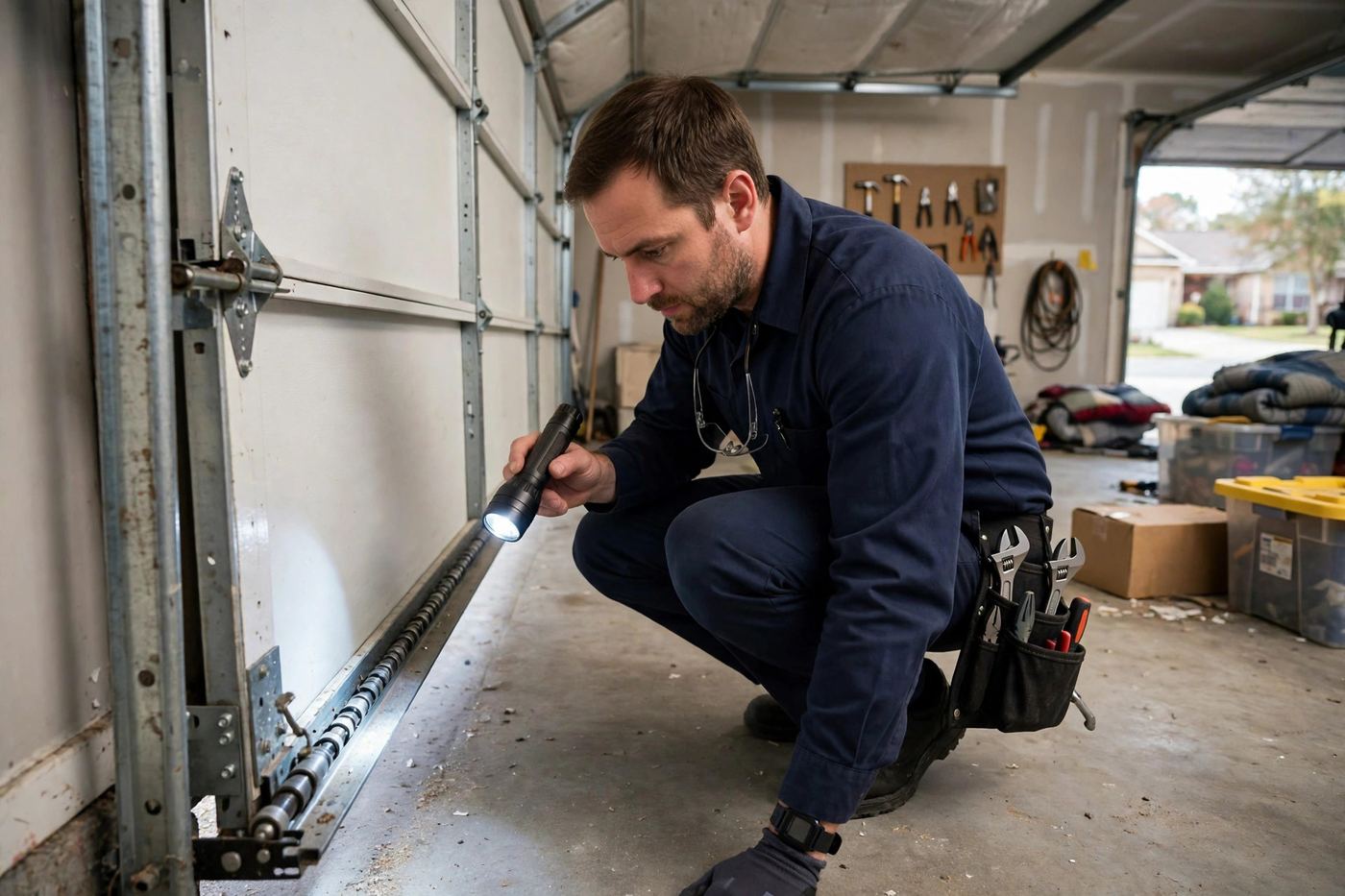
Check yours with the flashlight test: at night, lights on in the garage, door closed — every visible sliver from outside is a leak path. Wavy gaps along the floor mean the slab has settled or the seal has compressed out; both are fixable, and in cold climates both are freeze-protection for pipes in garage walls.
The Decision, by Situation
Bedroom or living space above/beside the garage: insulated replacement (double-layer minimum, triple if the budget allows) — comfort, quiet and energy all argue yes, and you'll feel it daily. Garage used as workshop, gym, laundry or EV charging hub: insulate — you're heating/cooling a workspace now. Detached storage-only garage in a mild climate: a kit or nothing are both defensible; spend on seals first.
Replacing the door anyway for damage or age: the insulation upgrade inside a replacement quote is the cheapest insulation you'll ever buy (often $100-$300 over the uninsulated equivalent), because the labor is already there. That's the moment to take it. Ask us for the numbers both ways when we quote your door — (210) 964-8892 — the comparison should be explicit, not assumed.
Measuring What You Have Now
Identify your current door's construction before shopping: rap a section with a knuckle (a hollow ring is single-layer steel; a dull thud suggests insulation), open a section edge or look for a manufacturer label with model and R-value, and check whether sections feel uniformly cold on a winter morning — thermal imaging apps and even a hand can map the cold bridges at joints and frames.
Then check the seals with the flashlight test described in this guide. Many owners discover their 'insulation problem' is half air leakage — which is the cheap half. Fixing seals first and re-measuring comfort for a month sometimes ends the project at $100 instead of $1,000; when it doesn't, you've still bought the half that every option needs.
Insulation and the Opener: The Weight Conversation
Every pound of insulation is a pound the springs must balance. Factory-insulated doors are sprung correctly from birth. The retrofitted door is the risk: kits add 15-40 pounds, and a door balanced for its old weight now strains the opener and drifts down from the halfway test. This is not a reason to avoid kits — it's a reason the balance test is a mandatory step in the project, with a professional spring adjustment ($75-$150) as the planned contingency.
While springs are being discussed: an aging door getting insulation is a natural moment to assess spring life. Adding weight to tired springs accelerates their schedule. A technician can give you both verdicts in one visit and sequence the work so the door is opened up exactly once.
Before-and-After: Measuring Whether It Worked
Insulation projects deserve a verdict, so gather the 'before' numbers first: on a representative extreme day (the hottest afternoon or coldest morning of the season), note the garage temperature at door height, the temperature of the wall shared with the house, and — if a room sits above — whether its floor feels cold or its heating runs long. A phone photo of a cheap thermometer in the same spot, same hour, is a perfectly good dataset.
After the work, repeat the measurements on a comparable day. Typical honest results for an attached garage going from single-layer steel to a double-layer insulated door with fresh seals: the garage moderates by 10-20 degrees at the extremes, the shared wall stops feeling like an exterior wall, and the room above loses its cold-floor complaint. If your after-numbers don't move, the air leakage half of the project is unfinished — seals, not more R-value, are the next dollar.
Keep the numbers with your home records. Like the maintenance log, they convert a feeling into an asset: at sale time, 'insulated door, documented 15-degree summer improvement' is a sentence a buyer's inspector can respect — and during ownership, it's how you know the project actually did what this guide promised.
Insulation Options Compared
| Item | Cost / Rating | Notes |
|---|---|---|
| Single-layer steel (existing) | R-1 to R-2 | Typical existing door; fine for detached, storage-only garages |
| DIY retrofit kit | Adds ~R-3 to R-6 | $100-$250 — mild climates; sound young doors |
| Double-layer door (polystyrene) | R-6 to R-9 | $750-$1,300 single installed — most attached garages |
| Triple-layer door (polyurethane) | R-12 to R-18 | $1,100-$1,800+ installed — finished garages; rooms above |
| Seal package refresh | Stops air leakage | $60-$140 — every door, every option |
Frequently Asked Questions
What R-value do I need for my garage door?
For most attached garages, R-6 to R-9 (double-layer) delivers the bulk of the benefit. Finished garages and rooms above justify R-12+. Beyond that, seals and air leakage matter more than additional R.
Will insulating my door make it too heavy for the opener?
A factory-insulated door is sprung for its weight from day one — no issue. A DIY retrofit kit adds weight to an existing door; always balance-test afterward and have springs adjusted if the door no longer holds at halfway.
Do insulated doors really make the garage quieter?
Yes — the foam core and (on triple-layer) the second steel skin damp the vibration and drumming of the door in motion and in wind. It's one of the most noticeable day-one differences owners report.
Is it better to insulate my current door or replace it?
If the door is young and sound, a kit plus new seals is a sensible, cheap step. If the door is old, damaged or single-layer steel you're already considering replacing, buy the insulation inside the new door — the incremental cost is lowest there.
Does insulation help in hot climates too?
Absolutely — insulation resists heat flow in both directions. In hot regions it keeps garage heat out of adjacent rooms and keeps the garage itself dramatically cooler, which also protects car batteries, paint and stored goods.
Does an insulated door help with garage noise from the street?
Somewhat — mass and damping cut both the door's own operational noise and a portion of transmitted street noise, though the door remains the thinnest 'wall' of the garage. Owners consistently rate the quieter operation as the most noticeable daily benefit; full soundproofing is a different project involving seals and the garage's other surfaces.
Related Services
New Garage Door Installation
Full door replacement and new installs — steel, insulated, carriage-style and modern doors, measured, fitted and balanced.
Learn more about new garage door installation →Garage Door Repair
Complete diagnosis and repair for doors that won't open, close, balance or seal — most repairs finished in a single visit.
Learn more about garage door repair →Garage Door Maintenance & Tune-Up
A full tune-up: balance test, lubrication, hardware tightening, sensor and safety checks — the cheapest way to avoid a breakdown.
Learn more about garage door maintenance & tune-up →← All garage door guides · Costs & pricing hub
Garage Door Stuck? We Can Fix It Today.
Same-day appointments and 24/7 emergency service across all 50 of our service cities. Upfront price before work starts — no surprises on the invoice.
(210) 964-8892 ☎ Call Now — Open 24/7